


- 1 Proficiency in JavaScript & React: Teams should have deep knowledge of JavaScript and React concepts like components and state management.
- 2 Native Module Integration: Expect the team to handle Objective-C, Swift, Java, or Kotlin for complex functionalities requiring native code.
- 3 Cross-Platform Optimization: The team must optimize UI/UX for both iOS and Android while maintaining a shared codebase.
- 4 Advanced UI/UX Capabilities: High-quality, user-friendly interfaces using libraries like React Navigation and Styled Components are essential.
- 5 Strong Project Management: Agile methodology, transparency, and tools like Jira or Trello ensure smooth development workflows.
- 6 Thorough Testing & Debugging: Tools like Jest, Detox, and Flipper must be used for robust testing across devices and OS versions.
- 7 Backend Integration Expertise: Teams should seamlessly connect with backend systems for data, authentication, and payments.
- 8 Security Compliance: Secure coding practices, data encryption, and compliance standards must be a top priority.
Every business would primarily expect a reliable app for efficiency in its operation. They will expect the application is responsive, efficient, and user-friendly. So, a proper technology must be used that can serve all these purposes properly.
One of the most popular technologies enabling this is React Native. It is a JavaScript framework that allows developers to create mobile apps for both iOS and Android. However, to make the most of this powerful technology, it is important to understand what to expect when hiring a team.
8 Expectations You Can Have from the React Native Development Team
Here are some of the basic expectations from the development team working on React Native:
1. Expertise in JavaScript and React

React Native is built on JavaScript and shares many aspects with ReactJS. Therefore, a capable development team must have strong proficiency in JavaScript, along with React concepts like components, state management, and hooks. They must be able to write clean and maintainable code using the React Native framework.
Beyond the Basics
A top-tier team goes further than basic syntax. They should deeply understand React’s reconciliation algorithm and component lifecycle. Poor state management can trigger cascading re-renders. This drains battery life and causes the UI to stutter. To avoid this, developers should be skilled with memoization techniques — specifically useMemo and useCallback — to prevent expensive calculations from running on every render.
A mature approach to global state management also matters. Redux was the traditional default, but many modern teams now prefer lighter, more modular tools like Zustand, Jotai, or the native Context API paired with custom hooks.
Why TypeScript Matters
It’s also important that the team writes strictly-typed JavaScript using TypeScript. Plain JavaScript in a large mobile codebase leaves you exposed to runtime errors that only show up on specific edge-case screens.
By enforcing strict TypeScript types for props, API responses, and state, a professional team catches most potential crashes at compile time — not after your users find them. This reduces the burden on QA and leads to a more stable product.
2. Experience with Native Modules
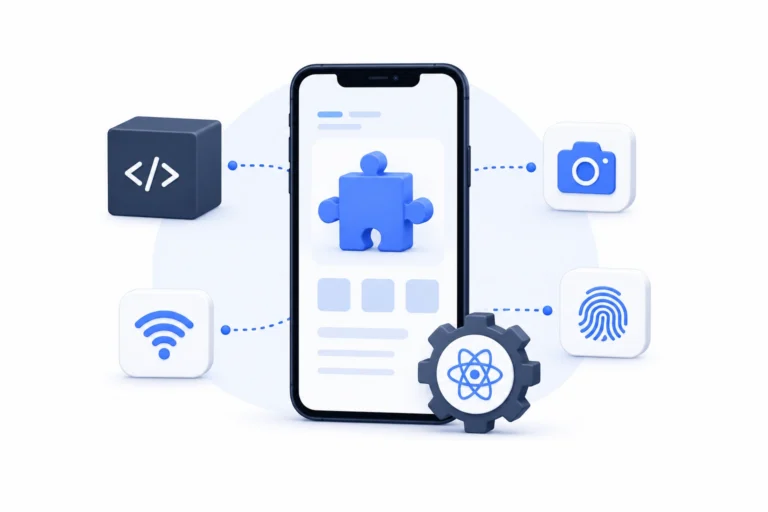
React Native handles most cross-platform work, but some complex features still need native code. A skilled team should be comfortable integrating native modules written in Objective-C, Swift, Java, or Kotlin.
For certain functionality, native development is unavoidable — and bridging native APIs efficiently becomes essential.
3. Understanding of Cross-Platform Optimization
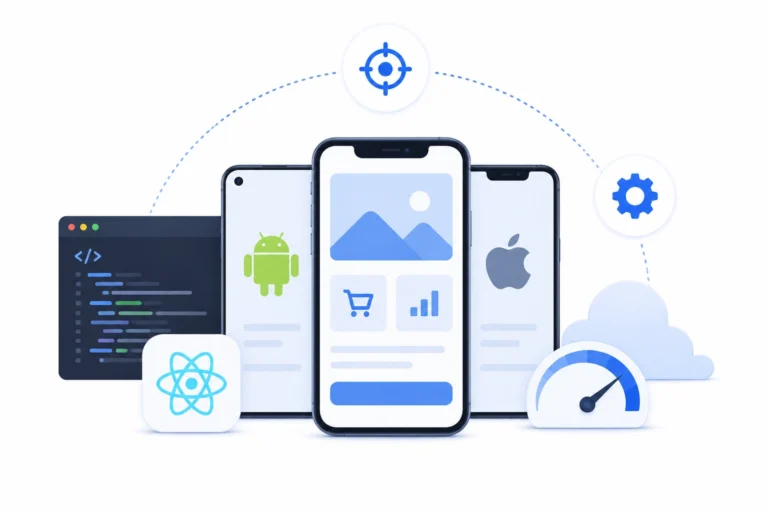
One of the biggest advantages of React Native is its ability to reuse code across different platforms. An expert team will optimize UI components, layouts, and performance for each platform while maintaining consistency. You should expect the team to discuss how they handle the platform without bloating codebase.
One of React Native’s biggest strengths is code reuse across platforms. An expert team optimizes UI components, layouts, and performance for each platform, while keeping things consistent.
Ask your team how they handle platform differences without bloating the codebase.
How React Native Talks to the Device
Real performance requires understanding how React Native communicates with the host device. Historically, this happened through an asynchronous “Bridge,” which serialized JSON messages between the JavaScript thread and the native UI thread.
If developers run heavy calculations or complex animations directly on the JS thread, the Bridge gets congested. The result: dropped frames and a sluggish experience. An expert team knows when to offload animations to the UI thread using libraries like React Native Reanimated.
The Shift to the New Architecture
React Native is currently undergoing a major shift with its “New Architecture” — often called Fabric and TurboModules. This eliminates the legacy Bridge in favor of the JavaScript Interface (JSI), letting the JS thread directly reference C++ host objects and call methods synchronously.
When hiring today, make sure your team isn’t just familiar with the old Bridge model. They should have hands-on experience migrating legacy code and building with the New Architecture. This keeps your app future-proofed and capable of native-level performance.
4. Better UI/UX Skills

The core strength of React Native lies in creating rich, native-like user interfaces. Expect your team to be familiar with third-party libraries like React Navigation, Styled Components, and other tools. High-quality mobile app development by using React should function well and be comfortable to the end-user.
5. Project Management and Agile Methodology

The productive development teams follow agile methodologies and use modern project management tools like Trello, Jira, or Asana to track progress. Regular updates, transparency, and milestones achievement are signs of a reliable team.
6. Testing and Debugging Practices

An experienced React Native team must use tools like Jest for unit testing, Detox for end-to-end testing, and Flipper for debugging. They must use a QA process that includes device testing across various screen sizes, platforms, and OS versions. Quality assurance is non-negotiable in native app development with the proper use of React.
An experienced team uses proper tooling:
- Jest for unit testing
- Detox for end-to-end testing
- Flipper for debugging
They should also run QA across a range of screen sizes, platforms, and OS versions. Quality assurance isn’t optional in professional React Native development.
Building a Testing Pyramid
A solid testing strategy starts at the component level with snapshot testing. By capturing serialized snapshots of UI components, the team can catch unintended visual regressions before they ever reach a real device.
Next comes integration testing. Tools like React Native Testing Library help simulate real user interactions — filling out forms, swiping carousels — while mocking external APIs to keep tests fast and reliable.
The Role of End-to-End Testing
End-to-end (E2E) testing sits at the top of this pyramid. While unit tests confirm individual functions work, E2E tests confirm the whole app boots up, navigates properly, and interacts correctly with the device OS.
Modern frameworks like Detox let developers write scripts that click buttons, scroll lists, and verify text on real iOS simulators and Android emulators. These E2E suites should run inside your CI pipeline, blocking any merge that fails.
7. Knowledge of Backend Integration
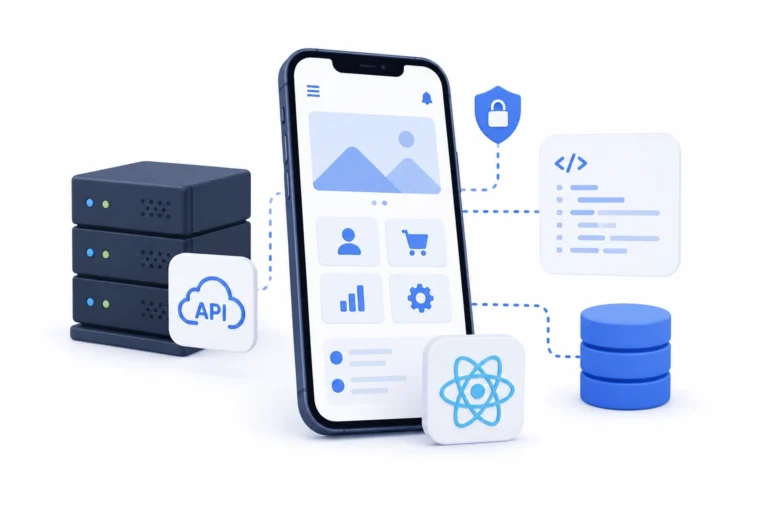
Most mobile apps require backend connectivity, which can be for data synchronization, user authentication, or payment processing. Your development team should be familiar with integrating with different backend technologies. This ensures seamless communication between the app and servers.
8. Security Best Practices
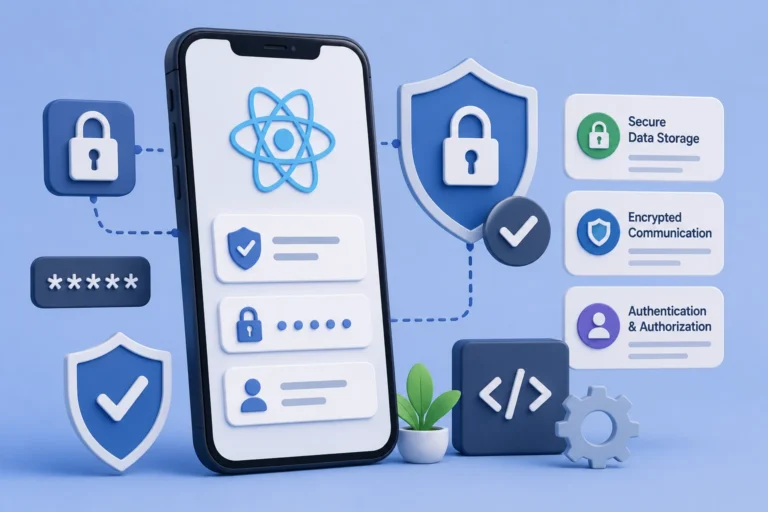
Security matters for any app handling user data. Your team should secure authentication against common vulnerabilities and follow best practices around secure storage, encryption, and compliance.
Protecting Your Code
React Native compiles your JavaScript into a bundle shipped directly inside the app binary. That makes it vulnerable to reverse-engineering.
A competent team should implement code obfuscation to scramble the JavaScript bundle. This makes it much harder for attackers to extract API keys, algorithms, or internal endpoint URLs.
For storing sensitive session tokens, standard AsyncStorage is not an option — it’s unencrypted and easily readable. Instead, teams should use the iOS Keychain and Android Keystore to encrypt credentials at the hardware level.
Locking Down Network Security
Network security matters just as much, especially for apps handling financial or healthcare data. A standard HTTPS connection isn’t always enough — it can still be intercepted through Man-in-the-Middle (MITM) attacks on compromised public Wi-Fi.
This is where SSL Certificate Pinning comes in. This technique hardcodes your server’s SSL certificate hash directly into the app. If the server’s certificate doesn’t match, the app immediately severs the connection — shutting down any attempt at traffic interception.
Ready to Hire a React Native Development Team?
Hiring a development team in React Native is an important decision that can drastically reduce development costs while delivering mobile apps. However, choosing a team properly is important it brings more than just coding skills.
The React Native framework is continuously evolving, and your team should be proactive in keeping up with deprecations, updates, and other community standards. Look for a team that understands the nuances of React Native, follows best practices in UI/UX, project management, and testing, and is committed to long-term support. With clear expectations and the right partnership, mobile app development can turn your vision into a high-performance product.
Look Beyond Individual Skills
Evaluating the team’s overall structure matters just as much as individual skills. A successful app needs more than frontend engineers writing UI code.
You need a well-rounded team, including:
- QA automation engineers who can build robust Detox test suites
- DevOps specialists who can set up CI/CD pipelines using tools like Bitrise, Fastlane, or GitHub Actions
Without automated deployment pipelines, pushing updates to the App Store and Google Play becomes slow, manual, and error-prone — bottlenecking your entire release schedule.
Don’t Skip Native Expertise
React Native enables roughly 80-90% code reuse across platforms. But that remaining 10% requires deep, platform-specific knowledge.
Your team shouldn’t be made up exclusively of JavaScript developers. You need experienced native engineers on standby — fluent in Swift/Objective-C for iOS, and Kotlin/Java for Android.
Whether you’re integrating a custom Bluetooth Low Energy (BLE) device, building advanced background geolocation, or debugging a tricky memory leak in Android’s rendering engine, having native talent on hand can be the difference between weeks of delay and shipping on schedule.
Make sure the agency or team you choose has this full range of expertise available.