

- 1 Platform Choice Matters: It is very important for a startup to select an appropriate development platform as this can determine the success and even the longevity of such firms.
- 2 Hybrid vs. React Native: Hybrid apps are less costly but less efficient, but with React Native there are better performance and flexibility of the apps.
- 3 React Native Benefits: That is, it gives cost benefits, fast access, and a truly native look and feel whilst not suffering from any demise in quality.

Introduction to Hybrid apps vs React Native apps
When your startup is in its early stage, you must handle many tasks. You build a website, select a domain, and launch your product. But you also must choose the right mobile app platform.
You cannot go wrong here. The platform you choose dictates how far your startup can scale. If you want long-term success, you must compare platforms carefully. You often must choose between hybrid apps or React Native apps.
Many startups choose hybrid apps because they build much faster. They come with coding shortcuts that easily reduce development time. This speed makes hybrid apps very popular.
Another major reason startups love them is the low cost. Startups rarely have massive budgets to build separate native apps. Hybrid apps provide a cheap way to build apps that work everywhere.
However, this initial low cost can sometimes be a double-edged sword. While getting an application to market quickly is critical for securing early funding rounds and validating your business model, the technical debt accrued by taking development shortcuts often resurfaces within the first year of operation. Investors and early adopters generally forgive minor visual glitches, but they have zero tolerance for core functional failures or sluggish screen transitions. When your user base suddenly expands and traffic spikes, the foundational architecture of your chosen platform becomes the defining factor in whether your app scales successfully or crashes repeatedly. Therefore, understanding the deep structural differences between hybrid frameworks and React Native is not just a technical decision—it is a foundational business strategy.
Disadvantages related to Hybrid Apps
However, hybrid apps have several big disadvantages. As a startup, you often must compromise on quality. A hybrid app is bad if you need a fast, responsive app.
Their overall performance is usually questionable. If you want low costs but fear bad performance, there is a better solution. React Native apps give you cost advantages without huge compromises. Let us discuss the real challenges of hybrid apps first.
Hybrid app development challenges
The biggest challenge with hybrid apps is their slow speed. These apps use an extra layer to separate the code from the mobile device. This extra layer ruins speed and performance.
This exact slow speed is why Facebook switched to React Native from HTML5.
It is also very difficult to add new features to hybrid apps. Startups desperately need high flexibility for adding features. You must update apps regularly to easily compete.
Hybrid apps make updates very difficult. Without fast feature additions, your app’s value strictly drops.
Another problem is the difficult debugging process in hybrid apps. That extra code layer makes debugging incredibly complex. This ruins how your finished app performs because hidden bugs remain.
Furthermore, hybrid applications often struggle immensely with device-specific hardware integrations. If your startup’s product relies heavily on seamless access to the smartphone’s camera, GPS location services, Bluetooth connectivity, or biometric security scanners, a hybrid approach will likely cause endless friction. Because hybrid apps rely on generic browser wrappers, they often require cumbersome third-party plugins to communicate with native hardware. These plugins are frequently outdated, poorly maintained, or completely incompatible with the newest iOS and Android operating system updates. Consequently, your engineering team will spend countless hours writing custom patches just to keep basic hardware features functioning after a routine Apple or Google software update. This ongoing maintenance burden quietly drains the very financial resources that you initially saved by choosing a cheaper hybrid development route.
Why React Native apps?
The first benefit is the low development cost of React Native. You just need to hire expert mobile app developers in India.
You can quickly build a basic app. You can then continue adding features easily later. It is highly cost-effective and preserves the user experience.
You can use React Native for true cross-platform development. Unlike hybrid apps, React Native handles cross-platform challenges perfectly. It never sacrifices the native feel.
Developers use a single codebase for both iOS and Android. React Native uses minimal code to easily deliver a premium native experience.
React Native apps always perform much better than hybrid apps. They easily provide faster loading times and high performance. Developers heavily prefer React Native because it uses clean, reusable code.
Another massive advantage of React Native is its Hot Reloading feature. During the development phase, engineers can instantly see the results of their code changes on a physical device or emulator without needing to fully recompile the entire application. This drastically accelerates the development feedback loop, allowing UI designers and developers to iterate on complex animations and layout adjustments in real-time. Moreover, because React Native is backed directly by Meta (formerly Facebook) and supported by a massive global open-source community, there is an extensive library of pre-built, highly optimized components available. This means your startup does not have to reinvent the wheel for standard application features like navigation menus, push notification handlers, or complex state management systems.
React Native vs Other Languages: A Quick Comparison:
Kotlin vs React Native
Kotlin is a flexible language used purely for Android apps. It offers concise syntax and easily works with Java.
React Native is a cross-platform framework. It uses JavaScript to build apps for both iOS and Android. Developers heavily benefit from fast code reusability. Kotlin excels in Android, while React Native rules cross-platform apps.
React Native vs Swift
React Native allows developers to easily build mobile apps using JavaScript. It offers high code reusability between iOS and Android.
Swift is an Apple-exclusive programming language. Swift ensures optimized performance strictly for iOS. Choose React Native for versatility, or choose Swift for pure iOS development.
It is important to remember that choosing Swift means you are entirely ignoring the massive Android market unless you hire a completely separate Java or Kotlin development team. For an early-stage startup trying to capture maximum market share with limited funding, maintaining two distinct codebases is usually financial suicide. React Native brilliantly bridges this gap, allowing you to deploy to both major app stores simultaneously while still maintaining a rendering speed that closely rivals pure Swift.
React Native vs Tauri
React Native deeply extends React to build mobile apps. It uses shared codebases for iOS and Android.
Tauri is a completely different approach. It allows developers to build lightweight desktop apps using web code. React Native is strictly for mobile, while Tauri focuses heavily on desktop apps.
When Hybrid Apps Are Actually A Good Idea
Hybrid apps are occasionally the right call. A simple pre-release MVP is a great candidate for a hybrid app. It easily gets a basic product into users’ hands fast.
This requires far less engineering investment. If the app is just a basic catalog or form, hybrid apps work well. You do not need perfect performance for basic informational tools.
The real issue is that hybrid apps strongly sacrifice flexibility and performance. They simply trade quality for a shorter development cycle. This is a useful trade for MVPs, but very harmful elsewhere.
Why React Native Isn’t Another Hybrid Framework
React Native has massive technical advantages. It simply does not build apps using slow webviews. Instead, it securely calls real native UI elements.
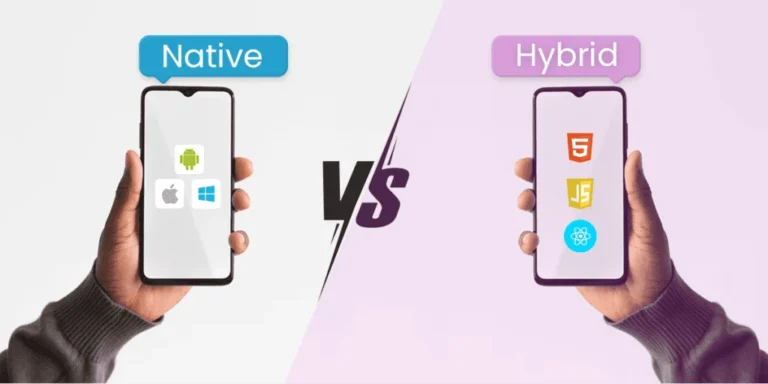
A button in a hybrid app just looks like a native button. A button in React Native is an actual native button. React Native directly accesses the native API.
This preserves perfect native performance. You still get rapid development and code sharing, but without the bad limitations of HTML or CSS.
Furthermore, React Native utilizes a dedicated bridge that asynchronously communicates between the JavaScript thread and the native operating system thread. This brilliant architectural design ensures that complex data processing calculations running in the background never freeze or stutter the user interface on the main screen. In a traditional hybrid webview, heavy JavaScript execution immediately blocks rendering, resulting in a frustratingly unresponsive app experience. React Native avoids this completely, allowing for buttery-smooth 60-frames-per-second animations and seamless scrolling through massive lists of data. When your users swipe, tap, or navigate through your application, the physical response feels identical to an app coded purely in Swift or Kotlin. This high-fidelity interaction quality is precisely what retains modern users and prevents your startup’s app from being immediately uninstalled after the first frustrating use.
Other Things To Consider
Beyond raw performance and development time, there are a few practical things to easily consider.
- App Complexity: How complicated is your app? Will you heavily revise the user interface later?
- Native Feel: How important is a premium native feel to your end users?
- Long-Term Support: How long can you invest in development? Supporting a basic hybrid app usually requires far less long-term investment.
- Finding Talent: Native apps require developers with highly specific platform knowledge. React Native makes finding JavaScript talent much easier.
Conclusion
It is very evident that React Native apps heavily beat standard hybrid apps. They easily solve the worst performance problems. If you want a cross-platform app for your startup, React Native is the best choice.