

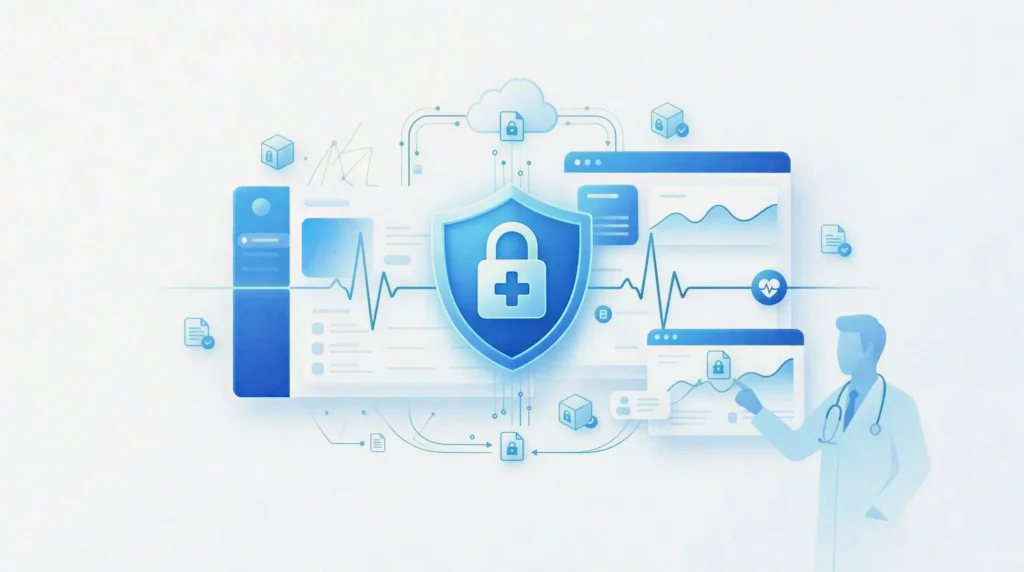
HIPAA applies beyond hospitals-it covers any software vendor, cloud provider, or tech partner that processes protected health information (PHI) on behalf of a healthcare organization. Compliance requires encryption, access controls, audit logs, and formal agreements with all data-handling partners.Violations can result in significant civil fines, and in severe cases, criminal penalties of up to $250,000 and imprisonment. HITECH (2009) strengthened enforcement and expanded who is directly liable.
- 1 HIPAA applies to software developers, cloud vendors, and any business associate that handles ePHI on behalf of a covered healthcare entity.
- 2 PHI includes any data-past, present, or potential that can identify a patient; this extends to wearables and loT medical devices that transmit health data to the cloud.
- 3 Violations can result in fines up to $250,000 and imprisonment of up to ten years for criminal breaches.
- 4 HITECH (2009) extends HIPAA by strengthening enforcement, increasing penalties, and expanding breach notification requirements.
- 5 Compliance is an ongoing operational effort - not a one-time certification - requiring regular audits, employee training, and security upgrades.
What Does HIPAA Compliance Mean?
HIPAA (Health Insurance Portability and Accountability Act), enacted in 1996, sets the legal standard for protecting patient health information in the U.S. Compliance means implementing physical, technical, and administrative safeguards — encryption, access controls, staff training, and documented policies — to prevent unauthorized access to PHI.
It applies to any organization that collects, stores, or transmits identifiable health data, and to any technology vendor that handles that data on their behalf.
Who Must Comply With HIPAA?
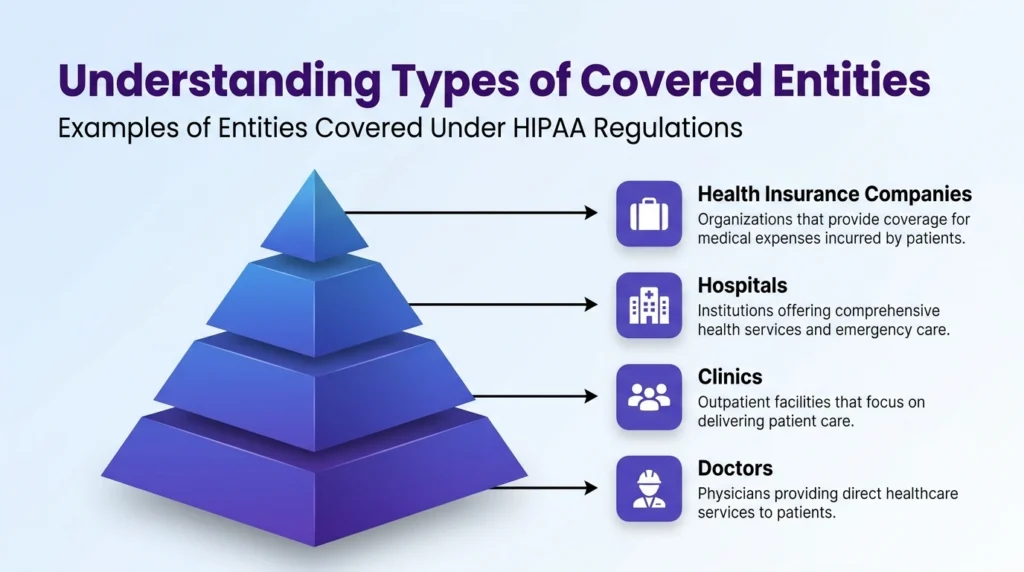
Covered Entities
- Healthcare providers (hospitals, clinics, doctors, dental and vision practices)
- Health insurers and payers
- Healthcare clearinghouses
Business Associates
- Software companies and SaaS platforms
- Cloud hosting and storage providers
- Any vendor processing PHI on behalf of a covered entity (Business Associate)

You must verify HIPAA compliance if your product:
- Is custom healthcare software for a medical organization
- Is an EMR/EHR (electronic medical/health records) system
- Processes or stores any PHI in the cloud
- Provides any service to a covered healthcare entity
Failing to do so puts you at risk of losing millions of dollars, damaging your reputation, and potentially even jeopardizing your company.
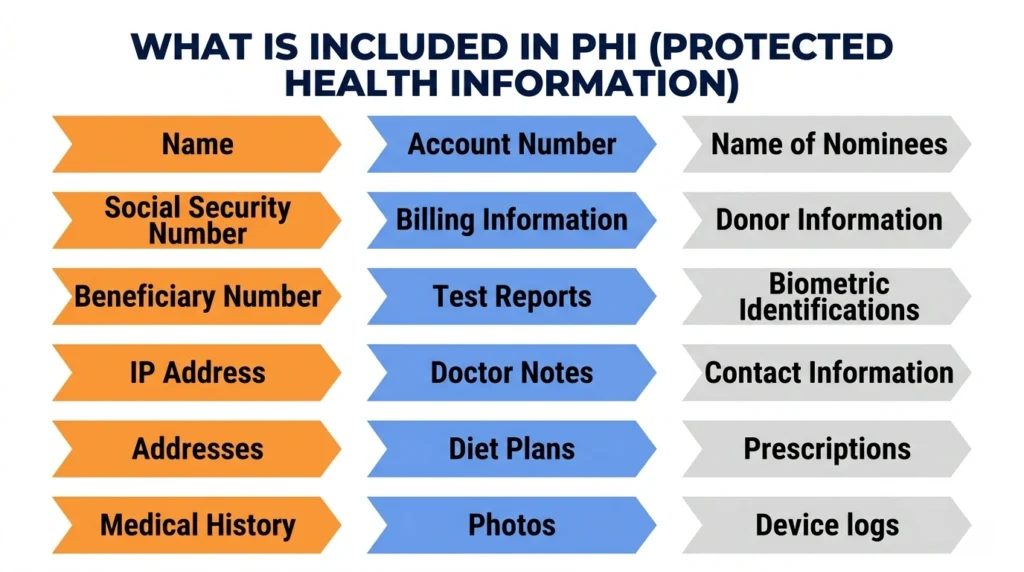
What Counts as PHI?
Any past, present, or potential health information that can directly identify — or be used to trace — a specific individual is considered Protected Health Information. This includes medical records, diagnoses, billing data, and any demographic detail linked to a health condition.
HIPAA vs. HITECH: Key Differences
HIPAA (Health Insurance Portability and Accountability Act) and HITECH (Health Information Technology for Economic and Clinical Health Act) both aim to protect patient health information, but they focus on different things:
| HIPAA (1996) | HITECH (2009) | |
|---|---|---|
| Focus | Privacy & security of health data | EHR adoption + stronger enforcement |
| Scope | Covered entities + business associates | Extends liability to subcontractors |
| Penalties | Civil + criminal | Higher tiers, mandatory breach notifications |
| Breach notification | Limited | Patients, HHS, and media must be notified |
Why Is HIPAA Compliance Difficult?
Complex Rules:
The regulations around HIPAA are detailed and technical, covering everything from privacy to security. Healthcare organizations need to understand and follow these rules, which can feel overwhelming at times.
Technology Keeps Changing:
With new tech like cloud computing, mobile devices, and IoT in healthcare, organizations constantly need to update their systems to keep data safe. Staying ahead of these technological changes and new risks can be resource-heavy.
Sharing Data Safely:
Healthcare organizations often need to share patient data with different partners. Making sure that information is shared securely and only with the right people—while still allowing for smooth collaboration—can be tricky.
Training Employees:
One of the biggest challenges is ensuring that all employees understand HIPAA and know how to handle patient information safely. A simple mistake, like sending a document to the wrong person, can lead to big problems.
Big Penalties:
If an organization doesn’t follow HIPAA rules, the penalties can be hefty, including large fines and even criminal charges. This pressure makes it even more important to stay on top of compliance at all times.
Cost and Resources:
Keeping up with HIPAA compliance can be expensive, especially for smaller healthcare providers. It often involves audits, employee training, security upgrades, and sometimes hiring experts—all of which take time and money.
Overall, HIPAA requires a lot of ongoing attention and resources, which can be challenging for organizations trying to keep up with the rules while ensuring their systems run smoothly.
What Is a HIPAA Violation?
A violation occurs when PHI is inadequately protected. Common examples:
- Failing to keep Protected Health Information (PHI) private
- Accessing PHI inappropriately (e.g., looking at patient records without authorization)
- Sending PHI through insecure methods (like unencrypted emails or public networks)
These violations can have serious consequences, with fines that can reach up to $250,000 and the possibility of imprisonment for up to ten years in the case of severe breaches. Keeping PHI secure and ensuring proper handling is essential to avoid these penalties.
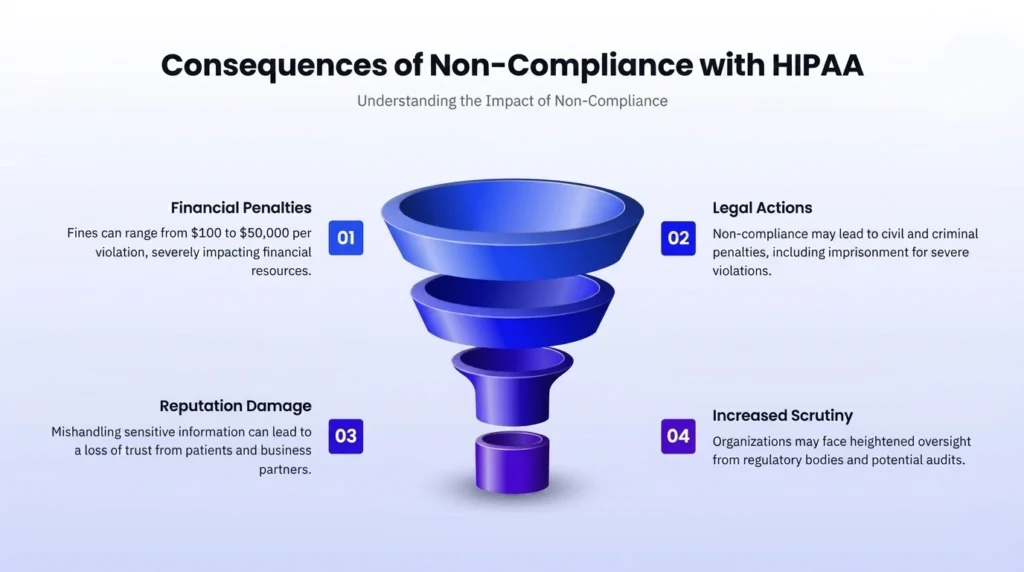
Penalty tiers:
| Penalty Tier | Culpability | Max Fine per Violation | Criminal Penalty |
|---|---|---|---|
| Tier 1 | Reasonable Efforts (unknowing) | $73,011 | None |
| Tier 2 | Lack of Oversight | $73,011 | None |
| Tier 3 | Neglect – Rectified within 30 days | $73,011 | None |
| Tier 4 | Neglect – Not Rectified | $2,190,294 | Up to 10 years |
*Table last updated on January 28, 2026, and includes the cost-of-living adjustment multiplier for 2025 (1.02598).
Source: HIPAA Violation Fines
Conclusion
For software teams building in healthcare, HIPAA compliance starts at architecture — encryption, access controls, and audit logging built in from day one, not retrofitted. Understanding whether your product qualifies as a business associate, and ensuring every data-handling partner has a signed BAA, are the two most critical first steps. With HITECH strengthening enforcement and IoT expanding PHI scope, the compliance surface will only grow.