


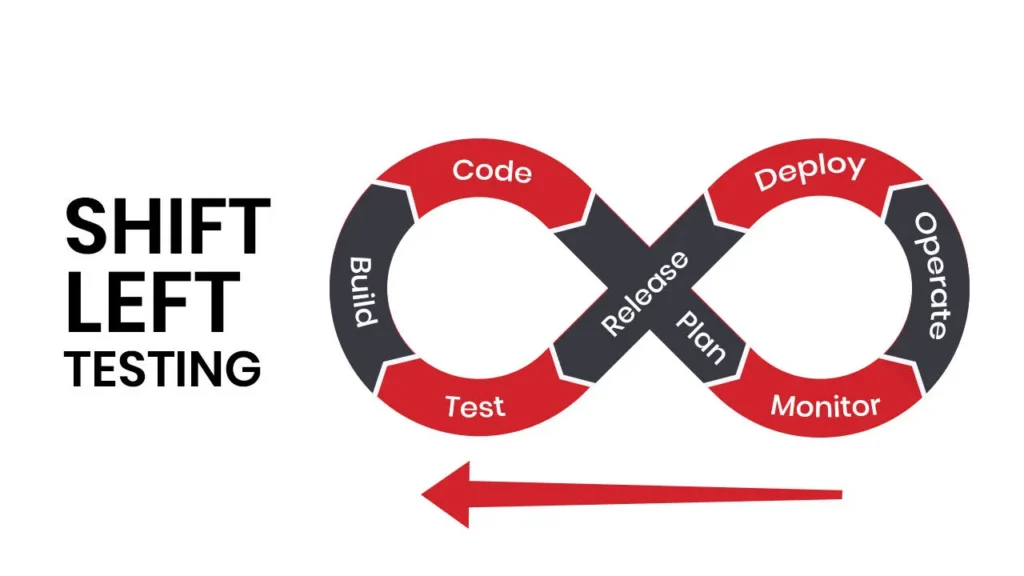
The best way to reduce production bugs is to find them earlier. Shift-left testing, AI-assisted QA, modern bug management tools, and a shared quality mindset help teams ship faster with fewer defects.
- 1 Finding bugs early is far cheaper than fixing them in production.
- 2 Shift-left testing improves quality by catching issues during development.
- 3 AI-powered testing and modern bug management tools speed up detection and resolution.
- 4 Consistent testing across the SDLC reduces production incidents.
- 5 A proactive testing culture makes quality everyone's responsibility.
Bugs found in production cost 30 to 100 times more than bugs found in development. Every engineering leader knows this. Yet a large share of bugs still slip past QA and land on real users. The problem is rarely the tester. It is the process, the tooling and the moment testing enters the sprint. Bug testing tools that come in at the end of the cycle catch what earlier steps missed. Shift-left testing moves detection to the moment code gets written. This post explains why bugs escape, which tools help and how a proactive testing culture cuts the cost of quality.
The Hidden Costs of Finding Bugs in Software After Launch
Finding bugs in software after launch triggers costs that never show up in the engineering budget. Customer support hours spike. Sales conversations pause on incident questions. Trust with existing users takes months to rebuild. Engineering pays too: context switching from planned work, war rooms, hotfixes deployed under pressure and rework of tests that should have caught the issue. A single P1 incident on a mid-sized SaaS product easily runs 50,000 to 200,000 US dollars in loaded cost. That is per incident. Prevention is the only sustainable answer.
5 Reasons Your Current Quality Assurance Testing Process Is Failing
Quality assurance testing fails for five predictable reasons. First, tests get written after the code, not with it. Second, QA runs at the end of the sprint, so bugs surface when the pressure to ship is highest. Third, test coverage focuses on happy paths, not edge cases. Fourth, environments differ enough between dev, staging and prod that bugs reproduce in one and not the others. Fifth, bug reports lack the context needed to reproduce, so fixes take longer than the original bug hunt.
Strategic Fix: Integrating a Modern Bug Management Tool
A bug management tool that talks to your CI pipeline, your release tracker and your chat tool is the connective tissue quality needs. Bugs get filed with reproduction steps, environment metadata and stack traces attached automatically. Triage happens in one view instead of five browser tabs. Duplicate detection catches issues that would have been filed twice. Teams that get this right cut bug lifecycle time by half in the first quarter.
Bug Testing Tools for Every Stage of Development
Bug testing tools work well when matched to the stage they cover. This table maps the stages to the tool types that move the needle at each.
| Stage | Tool type | Why it matters here |
| Coding | Linters, static analysis, AI code review | Catches issues before commit |
| Unit tests | Test framework, coverage reporter | Fast feedback on logic |
| Integration | API test runner, contract testing | Catches interface bugs early |
| End-to-end | Browser automation, mobile emulators | Real user path coverage |
| Pre-release | Load testing, chaos engineering | Surfaces production-like issues |
| Production | Error tracking, session replay | Catches what testing missed |
How to Accelerate the Software Bug Fix Cycle
A faster software bug fix cycle needs three things. Reproducible environments so the fix does not depend on a specific developer’s laptop. A clear reproduction path is attached to every bug, so the engineer starts with the diagnosis half done. And a testing pipeline that runs on the fix branch before merge, so regressions get caught before they hit main.
The Role of AI-Powered Software Testing Tools in 2026
AI software testing tools now generate test cases from user stories, spot regressions in visual UI diffs and cluster similar bug reports automatically. They do not replace human testers. They cut the routine load so testers focus on the harder problems.
Cultural Shift: Making the Software Bug Fix a Shared Responsibility
Teams that ship the fewest bugs treat software bug fix work as shared, not delegated. Developers write the tests for their own code. QA pairs with developers on hard cases. Product managers review edge cases before the sprint starts. On-call engineers document the incident and hand the postmortem to the whole team. Culture beats process every time here. The sharpest-designed pipeline fails when engineers think testing is someone else’s job.
The Innostax Zero-Bug Philosophy: Early Detection Framework
Innostax runs testing programs where bug testing tools sit at the front of the SDLC, not the back. Every managed engineering team ships with a QA engineer, a defined test-first workflow and a bug management tool wired into delivery Slack. Our clients see incident rates drop by half in the first two quarters and stay down as the codebase grows. If bugs keep reaching production despite growing QA investment, talk to us about the shift-left playbook.
Checklist: Preventing Bugs Before They Reach the QA Stage
This checklist is the shortlist of practices that keep bugs out of QA. Each item is cheap to add and expensive to skip.
| Practice | Where it lives | Payback window |
| Static analysis on every commit | CI pipeline | Week 1 |
| Unit test coverage over 70 percent | Team standard | Month 1 |
| Contract testing between services | CI pipeline | Month 1 |
| Feature flags on every ship | Release process | Month 2 |
| Pair review of edge cases | Sprint planning | Ongoing |
Conclusion: Building a Proactive Testing Culture
Bug testing tools work when the culture around them is proactive. Shift detection left, wire tooling into every stage, make bug fixing a shared responsibility and track incidents as a leadership metric. Teams that follow this pattern ship faster with fewer surprises. The teams still catching bugs in production every week are paying the escape tax every day, and it compounds.