

Software QA Testing Cost in 2026 ranges from fifteen to two hundred dollars per hour. Software QA Testing Cost depends on the region, the specialization and the engagement model. Manual QA is the option to start but Manual QA becomes expensive when scaled. Automated QA is more expensive at first. Automated QA reduces long‑term spending. Testing services such as security, load and accessibility that use AI assistance and specialization cost twenty to forty percent more. They often deliver more coverage for each dollar spent. Most teams should allocate fifteen to twenty‑five percent of their engineering budget to Software QA Testing Cost. Spending little means under‑investment while spending too much means inefficiency. Vendors cannot be compared until the scope of the project has been normalised. Cheap quotes can turn into contracts because of hidden expenses, like environment provisioning, onboarding and off‑hours support.
- 1 QA rates span $15–$200/hr, driven by team seniority, location, automation needs, testing scope, app complexity, and compliance requirements
- 2 India offers the lowest rates ($15–$80/hr across manual to specialized), while the US commands the highest ($40–$200/hr)
- 3 Manual QA has low setup cost but high per-test-run cost; automated QA is the reverse — high setup, low marginal cost over time
- 4 AI-assisted QA carries a 20–40% rate premium but improves test generation, visual regression detection, and bug clustering
- 5 Hidden costs — environment provisioning, tool licenses, onboarding time, change requests, meetings, off-hours support — often go unbilled in headline rates
- 6 Fixed price suits small well-scoped projects; T&M suits evolving agile scope; dedicated teams suit long-term engagements needing domain continuity
- 7 A healthy QA budget is roughly 15–25% of engineering spend; below 15% often signals under-investment, above 30% often signals inefficiency
- 8 Innostax's hybrid model (US-aligned leads + India-based engineers) targets US-quality coverage at offshore-blended rates, with a claimed 30–40% efficiency gain in quarter one
QA testing services carry price tags that range from 15 dollars an hour to 200 an hour. It reflects specialization, geography, tool stack and engagement model. Buyers who compare quotes without normalizing the underlying scope end up choosing on the wrong axis. This post outlines QA testing costs in 2026, the factors behind them and the hidden expenses that can turn an affordable contract into a costly engagement.
The Business Case For Treating QA As An Investment
Software QA services return more than they cost when done well. Every bug caught before production saves 30 to 100 times what fixing it in production would have cost. Every release that ships without a hotfix saves engineering context switches. Every customer who does not churn because of a bug is revenue held. The leaders who treat QA as pure cost end up with lower quality and higher total spend. The leaders who track escape rate and defect cost see QA earn back its budget multiple times over each quarter.
What Determines Software Testing Cost?
Most QA budgets are shaped by a relatively small set of variables.
- Team Seniority: Senior QA engineers and automation specialists generally command higher rates than junior manual testers.
- Location: Onshore, nearshore and offshore teams operate with very different labour cost structures.
- Automation Requirements: Automation requires greater upfront engineering effort but can reduce the marginal cost of repeated regression testing.
- Testing Scope: Supporting web, mobile, API, performance testing, security and accessibility testing increases the required skills and coverage.
- Application Complexity: Distributed systems, payment flows, integrations and data-intensive products usually require more testing effort than straightforward applications.
- Compliance Requirements: Products operating under frameworks such as HIPAA or SOC 2 may require additional documentation, controls, traceability and security validation.
Average Hourly Rates for QA Software Testing Services in 2026
The prices of QA software testing services are different across markets and specialist areas. The table below highlights the rates:
| Region | Manual QA | Automated QA | Specialized (security, load, AI) |
| United States | $40 to $80 | $70 to $130 | $100 to $200 |
| Western Europe | $35 to $70 | $60 to $110 | $90 to $170 |
| Eastern Europe | $20 to $40 | $35 to $65 | $50 to $100 |
| India | $15 to $30 | $25 to $50 | $40 to $80 |
| Latin America | $25 to $45 | $40 to $70 | $60 to $110 |
Fixed Price vs. T&M vs. Dedicated QA Teams
Fixed price fits small, well-scoped projects. Time and materials fit agile engagements where scope evolves. Dedicated teams fit long-term work where you want stability and domain knowledge to accumulate. Pick the model that matches your risk profile.
Manual vs. Automated Software Testing Services
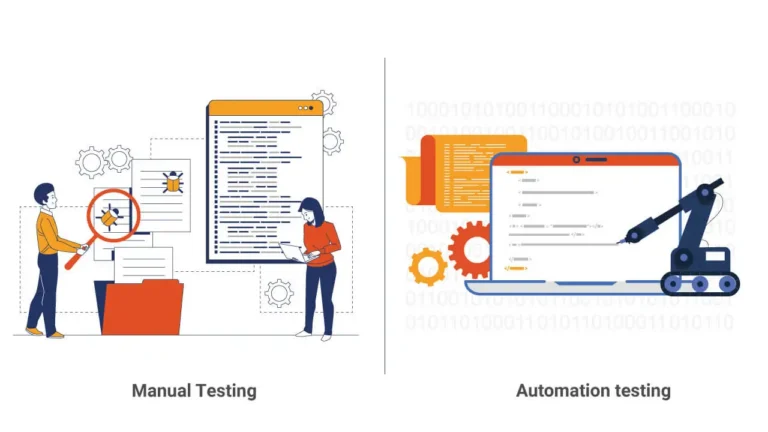
Software testing services split into manual and automated, and the cost profile differs sharply between them.
| Dimension | Manual QA | Automated QA |
| Setup cost | Low | High |
| Per-test-run cost | High | Low |
| Long-run TCO | Grows with test volume | Flat to declining |
| Coverage of edge cases | High | Medium |
| Regression speed | Slow | Fast |
| Where to use | Exploratory, usability, first release | Regression, load, cross-platform |
AI and Specialized Software QA Services
In 2026, AI-assisted software QA services carry a 20 to 40 percent rate premium. In return, they generate test cases from user stories, auto-detect visual regressions and cluster related bug reports. Security testing, chaos engineering and accessibility testing usually come at a higher rate. The rate looks high per hour and usually returns more coverage per dollar than generic manual testing. Verify the ROI on a paid pilot before signing a long contract.
Hidden Costs to Watch Out for When Hiring a Software Testing Company
Almost every testing contract has costs tucked away that don’t show up in the headline rate:
- Test Environment Provisioning: worth clarifying upfront who’s paying for the cloud footprint.
- Tool Licenses: sometimes shared, sometimes billed to you separately.
- Onboarding Time: usually charged at the full rate for the first two to four weeks.
- Change Requests: fixed-price contracts often price these aggressively.
- Reporting and Meetings: some vendors bill status calls as billable hours.
- Off-Hours Support: production coverage almost always sits outside the base rate.
Ask about each of these before you sit down to do the total-cost math.
How Innostax Reduces Software Testing Cost Without Reducing Quality
Innostax uses a hybrid testing model to control costs, pairing senior US-aligned test leads with mid-level engineers in India and modern automation tools. Clients get US-quality coverage at offshore-blended rates, with clear reporting on escape rate, coverage trend and cost per defect. If your QA budget has grown faster than your release velocity, we can usually show a 30 to 40 percent efficiency gain in the first quarter.
How to Budget for Your Next Software Testing Project
A useful QA budget starts with workload rather than a fixed percentage of overall engineering spend.
First, define:
- The platforms that require testing
- The types of testing required
- The expected release frequency
- The regression suite size
- The number of browsers, devices and environments
- The level of automation already in place
- Any compliance or specialized testing requirements
Then estimate the people, tools and infrastructure needed to support that scope. Industry estimates sometimes place QA at roughly 15% to 25% of project expenditure, while other estimates extend considerably higher depending on complexity. These figures are useful reference points, not budgeting rules. Include contingency for scope changes, automation costs and environment setup when building the QA budget.
Choosing the Right Software Testing Company for Your Budget
The right software testing company for your budget is simply the one that gives you the highest quality outcome per dollar. Normalize scope, verify tool stack, understand pricing model tradeoffs and pilot QA testing services before committing. QA costs today influence delivery performance tomorrow. Get it right and quality becomes a delivery accelerator that pays for itself every quarter.
A short pilot project can also reveal much more than a sales presentation: how the QA team communicates and reports issues, works with evolving requirements and integrates into your development processes.
Quality assurance costs today directly affect the pace of delivery, the number of production issues, and the quality of the client experience tomorrow. Done right, QA is not a cost to be optimized but an accelerator of delivery.
Get a QA Budget Benchmarked Against Your Actual Scope
Rate cards only tell you so much. Share your platform mix, release cadence and compliance needs, and Innostax will map out what QA should realistically cost for your product, not a generic tier.
The goal is to understand where your budget will have the most impact, whether that’s manual testing, automation, API coverage, performance testing, or ongoing regression testing. A scope-based estimate gives you a much clearer picture of the investment required before you commit to a testing partner.
Get a free, no-obligation QA cost estimate for your project.