

- 1 Simple Yet Powerful– Python’s clean syntax enables faster development cycles and easier maintenance, making it a developer favorite.
- 2 Highly Versatile – Ideal for diverse industries, Python supports both backend and data-driven applications with one unified language.
- 3 Rich Ecosystem – Python’s extensive libraries and frameworks accelerate innovation and development time.
- 4 Secure and Scalable – Built-in security features and scalable architecture make Python ideal for enterprise-level solutions.
- 5 Widely Adopted by Top Brands – Industry leaders like Google and Netflix use Python, validating its reliability and performance at scale.
Firms are always seeking tools that allow them to develop fast apps.
Amidst the different tools being used, Python development frameworks have emerged as the most preferred choice for companies all over.
Many firms trust Python for its simplicity and powerful tools in building everything from websites to firm-level software apps.
It has simplified the coder’s work and is known for building several good apps. Here, we will look at why so many firms rely on Python development services to bring their visions to life.
7 Reasons Firms Prefer Python App Development Services
Here are a few reasons why companies choose to look for Python coders for building their software and apps:

1. Simplicity Meets Power
One of Python’s biggest perks is its readability. This simplicity allows coders to focus on solving problems rather than dealing with different complex syntax.
This helps in faster development cycles and reduced costs. Teams can bring products to market more quickly, and maintenance becomes much easier.
2. A Versatile Language for All Kinds of Projects
Python’s freedom allows it to support many industries, from finance and healthcare to e-commerce and education. Companies offering Python app development services are particularly valued for their ability to give cross-functional fixes.
Firms now do not need many tech stacks for different parts of their tasks. With Python, one language can power both backend and data-driven fixes which can simplify setup.
3. Backed by a Strong Ecosystem
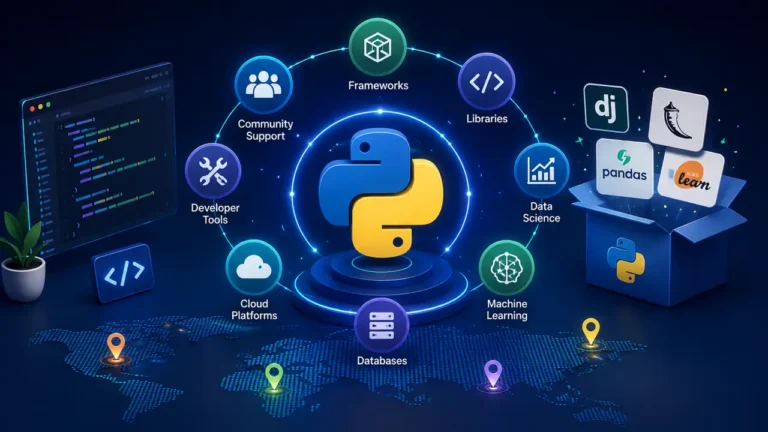
Python has a vast ecosystem of frameworks and libraries which speed up development and expand its tools.
When you partner with a Python development software company, you are not just hiring coders, you are also tapping into a rich ecosystem that is continually evolving. This ensures that Python stays ahead and remains equipped to handle different projects.
4. Security and Scalability
Firms in every industry are giving top priority to coding. Python, comes with built-in security features that help coders avoid common vulnerabilities.
Django, for instance, includes protections against SQL injection, cross-site scripting, and clickjacking by default. Whether you’re building a small internal tool or a large-scale firm platform, Python can handle complexity with ease.
5. Thriving Community and Steady Growth
Coders always contribute to open-source tools, share knowledge, and support most queries.
This global community ensures steady innovation and a steady stream of improvements. Python continues to evolve, adapting to new trends like cloud computing, AI, and the Internet of Things (IoT).
6. Cost-Effective and Fast Development
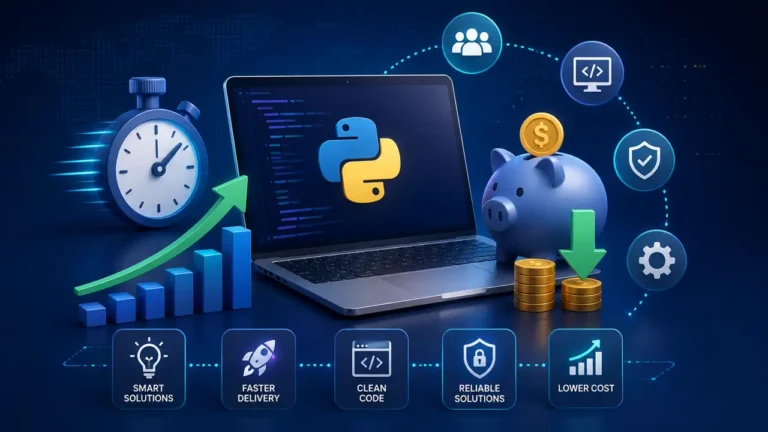
Hiring coders skilled in Python is more cost-effective compared to many other tools. The abundance of coders fluent in Python reduces recruitment challenges and salary inflation.
Firms can thus benefit from streamlined development processes and collaborative project management. This results in a better ROI.
7. Trusted by Big Companies
Apart from small and medium-sized firms, Python is also implemented by industry leaders like Netflix, Google, Instagram, Spotify, and Dropbox, which rely heavily on Python for their core setup.
As global brands put their faith in Python, it sends a strong signal to the rest of the business world.
Are You Ready To Use Python For Our Next App?
As tech can make or break a business, choosing the right programming language is critical. Python stands out as a versatile, reliable, and cost-fast fix for modern web and software development needs.By partnering with a pro Python development software company, firms can stay ahead of the competition and give a better web presence.
So, if you’re ready to harness the power of Python, now is the perfect time to implement what Python can do for your business.
Common Python Frameworks Firms Choose From
While the article does an excellent job of detailing the Python ecosystem as a whole, it would be useful to define the individual frameworks and their use cases for the business owner looking to make a hiring decision. The Django tool is an established favorite among web coders who want to create rich web apps with less coding and without having to rely on third-party tools for key features like user login and admin dashboards.
Flask, meanwhile, offers a more stripped-back choice to Django that puts more responsibility on the coder to configure each tool and setting. It also has an active ecosystem and is frequently used for smaller-scale web apps. The third major Python web development tool is FastAPI, which has seen a big rise in popularity due to its focus on speed and asynchronicity. It has been adopted by many firms that need to process high volumes of API requests. Which tool to choose usually depends on the project’s scope and the level of detail the coder needs to configure themselves.
Python’s Role in Other Areas of Tech
The versatility of the Python programming language has seen it being adopted in many areas of tech, including artificial intelligence, data science, and auto. In AI, Python has become the default programming language for many coders due to the ease of use and wide adoption of its machine learning libraries. For firms in the data science space, Python is seen as an obvious choice for statistical analysis and visualization.
The same can be said for auto, where Python has become extremely popular due to reducing the amount of repetitive, error-prone work. Also, since many fields are now adopting AI fixes, firms that want to stay ahead of the curve while also being able to utilize existing Python fixes will find it much easier to adopt AI fixes at the software level.
What to Look for in a Python Development Partner
While choosing Python as the programming language and the right tool is an key step, the business may want to consider what qualities to look out for in a Python development partner. First of all, the development partner should have skill not just with the language, but with the frameworks and tools required for the project at hand. The same goes for code review and quality control – the more skill the development partner has with Python projects, the less likely they are to make errors.
Equally, the business should have an honest discussion about their talk and management needs. The choice of a Python development partner should depend on the business’s ability to accommodate the coder in their existing setup, manage the development team, and well talk project specifications. Finally, the business should look for skill in the field they operate in, as domain-specific complexity can influence the engagement model significantly.
Common Myths About Python Development
Despite its popularity, Python has a few myths concerning its use for business apps. Although it is true that Python is not one of the fastest languages in terms of sheer computational power, this rarely matters in practice, for most apps where the language is used. For the majority of business apps, the time spent on development, ease of maintenance, and engineering cost make Python a viable candidate despite its theoretical disadvantage over other languages.
One of the biggest misconceptions is that Python is suited only for small-scale apps, when in reality, it powers some of the busiest platforms known to exist. Another myth is that Python’s reduced expressiveness is a drawback, but in reality, it is an edge, as it allows less time to be spent on trivial matters of setup, allowing engineers to focus on the actual domain of a given app.
Grasp the Total Cost of Python Development
When comparing the costs of development between programming languages, firms often mistake the first costs for the total costs of ownership. This is one of the strongest arguments in favor of Python as a language for business development, as there are significantly fewer hours of development needed for any non-trivial app due to the syntactic sugar of the language and the presence of external code repositories.
Also, the same property makes maintenance and feature addition easier and faster in the long term. When considering the cost of development, firms should take into account not just the first programming effort but also the ability to scale the product development vertically and horizontally, the cost of training new coders, and the long-term maintenance burden for the selected programming language.
How Firms Typically Structure Python Development Engagements
Any company that wishes to work with Python has several options available to them. The first is to build an in-house team of Python coders, which is the most direct way of working with the language. It is best suited for companies that have a long-term development vision for their product and can dedicate resources to Python development exclusively or mostly. Some companies outsource development to a third party that can give a team of Python coders for the duration of the project.
This way the company only pays for the development time and does not have to bear the cost of maintaining a development team internally. Lastly, some companies choose to supplement their in-house team with external experts for the duration of a project, which allows them to utilize the core competencies of the field while outsourcing less critical development tasks. Which method of development companies choose largely depends on their long-term vision for the product, the language, and the existing technical skill of their in-house team.