



- 1 React JS enables fast and scalable web app development through its component-based architecture and virtual DOM.
- 2 SEO challenges with JavaScript-heavy apps can be overcome by using techniques like server-side rendering (SSR) with Next.js.
- 3 React Helmet helps manage meta tags dynamically, improving how pages appear in search engine results.
- 4 Page load speed is optimized through features like code splitting and lazy loading, which boost user experience and SEO.
- 5 Using semantic HTML, sitemaps, and robots.txt ensures better indexing and crawling by search engines.
- 6 Mobile optimization is crucial for higher visibility on mobile search and improved user engagement.
- 7 SEO-optimized React apps lead to higher organic traffic, stronger brand visibility, and better conversion opportunities.
- 8 React’s modular structure supports scalability, allowing businesses to grow without compromising SEO performance.
- 9 Partnering with experts in React and SEO ensures your web app ranks well and performs efficiently.
Businesses need web applications that are fast and optimized for search engines. React JS for the web app development is important in building interactive applications as per the requirements. Combining it with solid SEO strategies helps businesses build web apps that are both high-performing and friendly to search engines.
React is a JavaScript library, and search engines traditionally have had a hard time crawling JavaScript-heavy pages. React JS helps to bridge the gap between dynamic frontend performance and search engine visibility.
Why Choose Building Apps with Technology like React JS?
React JS, has become the go-to library for frontend development with React due to its component-based architecture, virtual DOM, and fast rendering capabilities. It is flexible which allows developers to build scalable and responsive user interfaces.
However, JavaScript frameworks like React traditionally posed SEO challenges because search engine bots sometimes struggle to index dynamic content. This is where pairing React JS with SEO strategies plays an important role.
How React JS is Used in Software Development to Enhance SEO?
React JS can enhance SEO for app in following ways:
1. Server-Side Rendering (SSR) with Next.js
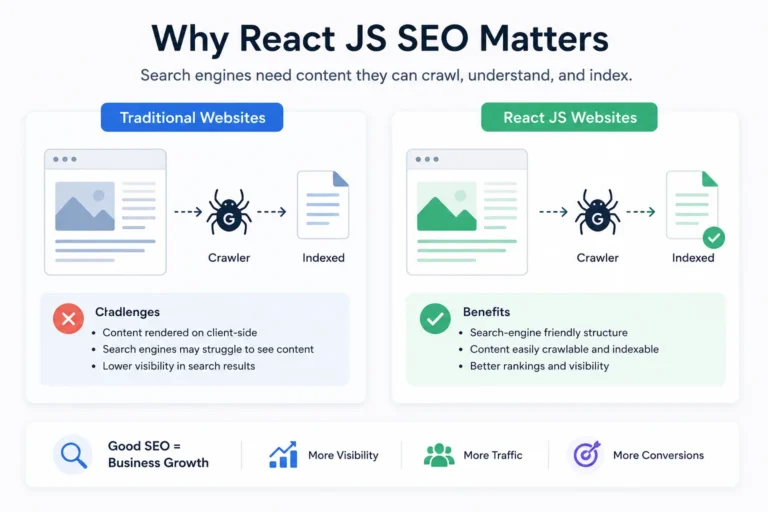
One of the most effective ways to make web app development SEO-friendly with React JS is by implementing SSR. It allows the content to be rendered on the server and then sent to the client. This makes search engine bots see the fully rendered content immediately. Using SSR with tools like Next.js, a React-based framework, developers can generate pages that are crawlable by search engines.
2. Page Load Speed Improvement
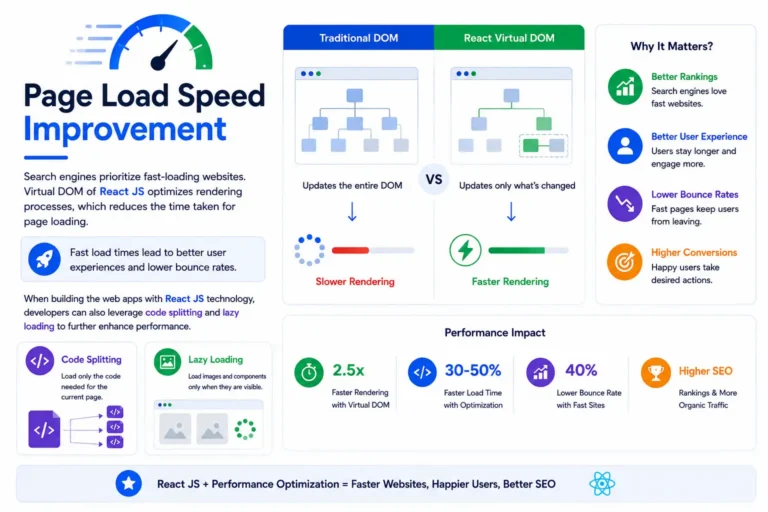
Search engines prioritize fast-loading websites. Virtual DOM of React JS optimizes rendering processes, which reduces the time taken for page loading. Fast load times lead to better user experiences and lower bounce rates. When building the web apps with React JS technology, developers can also leverage code splitting and lazy loading to further enhance performance.
3. How Search Engines Actually Crawl a React App
It is important to understand what happens on the back end when a search engine crawler accesses a React page in order to understand why certain practices are critical. With standard server rendering, a complete HTML document with all of its contents is returned with the very first call. When a client renders a React application, however, the first request will be answered with an empty HTML document containing a script tag pointing to a JavaScript bundle. The crawler will have to execute this code in order to get any meaningful content from the page, which Google can do, but the process is significantly more involved and takes more time, which is not ideal for SEO.
There is a fundamental difference between a page being crawled and a page being properly indexed, and the latter part can be considerably delayed in the case of client-side rendering. This is also why LinkedIn or Facebook preview cards for URLs sometimes show up blank, since their crawlers are not as sophisticated as Google’s and are unable to execute such code at all. Server rendering solves this problem by sending pre-rendered HTML code so that it can be read instantly by any kind of parser, which is why it appears as the number one recommendation in every React SEO guide.
4. React Helmet Allows to Manage Meta Tags

React Helmet is a handy library used in React JS that allows dynamic control of HTML head elements. You can customize titles, meta descriptions, and more based on each route or page. For businesses looking to optimize content dynamically, React Helmet ensures each page is properly described and categorized by search engines.
SSR vs. Static Site Generation: Picking the Right Approach
Server-side rendering is not the only way to make your React app crawlable, and it is not always the best option, depending on which pages you need to target. With a technique called static site generation, also available in Next.js and Gatsby, the HTML of a page is built ahead of time, during the build process, instead of being created on each request. This means that for non-dynamic content pages like marketing, blog posts, or pricing tables, static generation is a better fit than SSR, as these pages do not need to have their contents computed on the fly.
SSR, on the other hand, is a better fit for content pages whose data changes depending on the request URL: a user dashboard or a search page, for instance, or any page that has to show data relating to an authenticated session. It is normal to use a mix of approaches for different pages in a single site, and it is the preferred option when designing a project: when we start working on the technical design of a project, this is one of the first choices we make, on a per-page basis, not a site-wide one.
Key SEO Best Practices for Web Apps Development with React JS
Here are some tips that align well with custom React JS web app solutions for SEO:
- Semantic HTML: Use proper HTML tags (<header>, <article>) making it friendly for search engine crawlers.
- XML Sitemaps: Ensure your app has a sitemap for search engines to index all accessible pages.
- Robots.txt File: Guide search bots on the parts of your app that should or shouldn’t be indexed.
- Mobile Optimization: Responsive design for ranking high on mobile search and audience reach.
When you combine these best practices with frontend development for web apps with React, there is a competitive advantage in search rankings.
Structured Data and Rich Search Results
Semantic HTML and a clean sitemap help search engines to understand the structure of your page, but structured data goes a step further and tells them exactly what is on it. This means the addition of JSON-LD markup, the use of schema.org vocabulary to define the types of information contained on the page (products, articles, FAQs, or data specific to businesses) depending on the nature of the information contained on the page. This is precisely the kind of data that makes up the enhanced display of search results that you may already be familiar with for certain queries: star ratings below a product, an expanded version of the FAQ on the results page, or the display of a company’s schedule and address directly on the results page, without having to click on the link.
This data is not guessed by search engines by virtue of being present on your page, but must be marked up in a specific format so that search engines can recognize and display it correctly. On client projects, we usually add this markup once the general rendering and content strategy for a given page has been finalized, since structured data essentially describes what is on the page, rather than focusing on its general crawlability.
Real-World Business Benefits
Here are some of the real-world business benefits of making SEO-friendly apps with React.js:
1. Higher Organic Traffic

By ensuring your React app is SEO-friendly, you can attract more organic visitors. Higher traffic means more leads, conversions, and ultimately, sales.
2. Brand Visibility
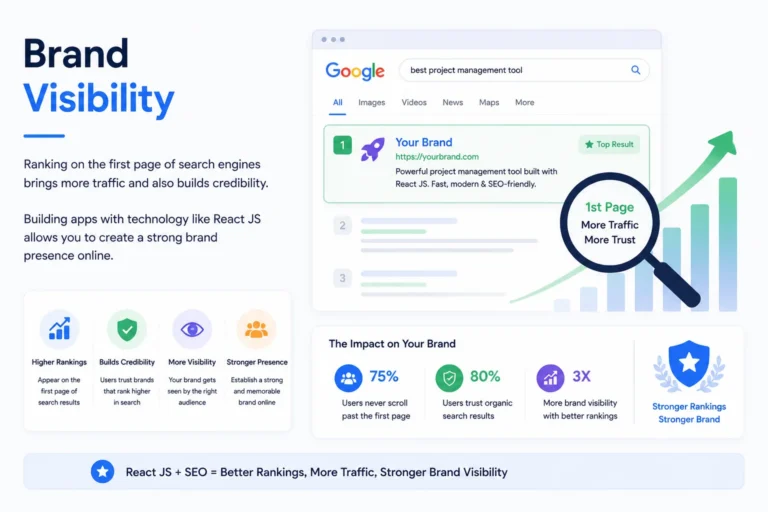
Ranking on the first page of search engines brings more traffic and also builds credibility. Building apps with technology like React JS allows you to create a strong brand presence online.
3. Scalability for Growth
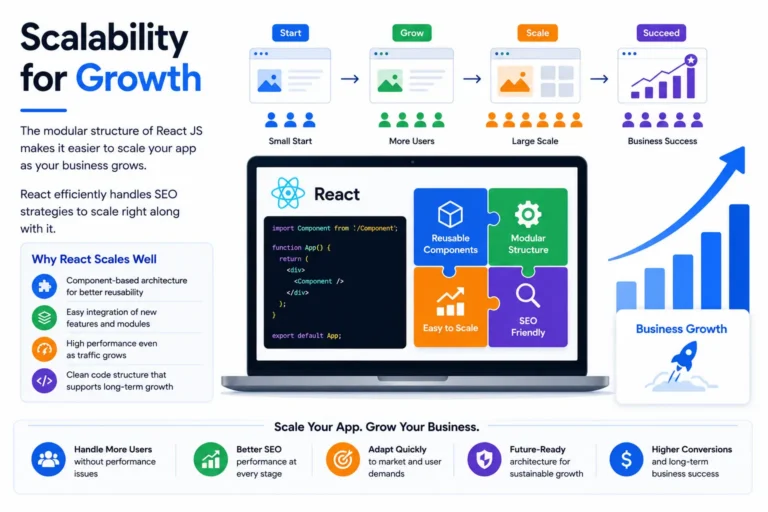
The modular structure of React JS makes it easier to scale your app as your business grows. React efficiently handles SEO strategies to scale right along with it.
Common Mistakes We See in React SEO Audits
When auditing a React application for search purposes, that has a low SERP rank despite being featured accordingly by clients, the same issues tend to appear more often than not. First and foremost, it is not uncommon to see projects that opted for the fastest and easiest way of deploying an application without server-side rendering (SSR) or server-side generation (SSG) of pages. While it allows to get a working app much quicker and with fewer resources, it severely impacts the way search engines index the project later on.
Another common issue is seen when canonical URLs are either misconfigured or absent on websites that utilize client-side routing, which has to do with how search engines handle multiple URLs with similar content. In short, each of these additional URLs will vie for the same position in search results, diluting the link equity of the canonical URL and consequently harming it. Finally, I often come across pages where large portions of content are hidden behind client-side lazy loading, which does not appear in the HTML code of the rendered page and cannot be indexed. These issues, once resolved, should allow such projects to see significant improvements in their SERP performance, though require some more effort than simply installing a popular SEO plugin.
Choosing the Right Partner for React JS Web Apps Development
To get the proper benefits of React JS for SEO, it’s essential to work with experts who understand development with SEO guidance. If you are considering building your next web app, ReactJS could be the key to standing out in a crowded online market. It can drive search visibility for your app, helping the business growth.
React JS gives you the flexibility to build fast, interactive applications, but getting the SEO side right takes more than just picking React as your framework. It means making deliberate decisions early, choosing the right rendering strategy for each page, structuring meta tags and structured data properly, and avoiding the common pitfalls that quietly limit how well an app performs in search. At Innostax, this is built into how we approach React projects from the start rather than treated as an afterthought once a site is already live. If you’re planning a new React application, or you have one already that isn’t showing up where it should in search results, we’re happy to take a look and walk through what’s actually happening under the hood.