

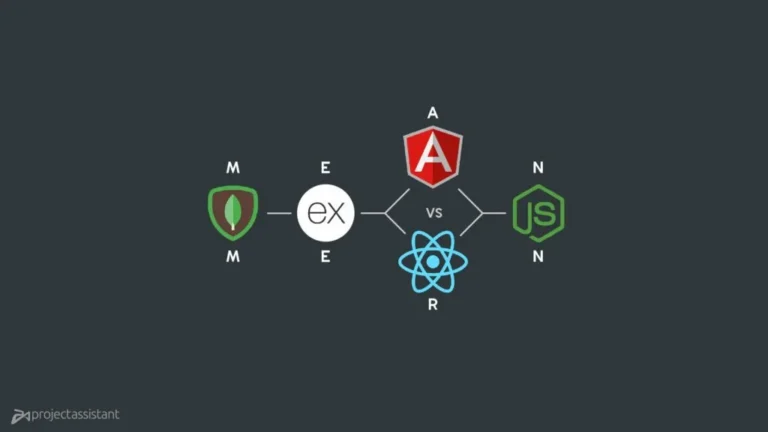
- 1 MEAN stack integrates MongoDB, Express.js, Angular, and Node.js for a cohesive full-stack JavaScript solution, offering cross-platform compatibility and access to extensive open-source libraries for building dynamic web applications.
- 2 MERN stack combines MongoDB, Express.js, React, and Node.js to create a flexible and efficient development environment with high performance for UI rendering, making it ideal for responsive single-page applications and small to mid-sized projects.
- 3 The choice between MERN and MEAN stacks hinges on project needs and team expertise with MERN offering flexibility and simplicity while MEAN provides a structured approach and a comprehensive front-end framework, both suited for modern web development.
In the ever-evolving landscape of web development, selecting the appropriate technology stack is a pivotal decision. Two popular choices that have gained widespread adoption are the MERN vs MEAN stacks. In this comprehensive comparison, we’ll delve into the key components, strengths, and considerations of each stack to help you make an informed decision based on your project requirements.
MERN vs MEAN Stack
The MEAN stack, an acronym for MongoDB, Express.js, Angular, and Node.js, constitutes a powerful combination of technologies for full-stack JavaScript development. This section delves into the distinctive features and advantages of each component within the MEAN stack. From the flexible NoSQL database MongoDB to the robust Angular framework, we explore how these technologies seamlessly integrate to streamline the development process and empower developers to build dynamic and scalable web applications.
Whereas, the MERN stack—MongoDB, Express.js, React, and Node.js—has emerged as a compelling alternative to MEAN. This subsection provides an insightful exploration of each MERN stack component, shedding light on how MongoDB’s NoSQL capabilities, Express.JS’s server-side prowess, ReactJS declarative UI development, and Node.js’s server-side JavaScript runtime collectively contribute to a versatile and efficient web development ecosystem. Discover the unique strengths and considerations that make the MERN stack a popular choice among developers worldwide.
Why the Stack You Pick Actually Matters Long-Term
It is easy to overestimate the impact of a particular framework on the development of a project, but in reality, the choice of the stack often has more significant consequences than one might think. For example, depending on the chosen stack, the ability to find qualified teammates will differ. The time required to bring new developers up to speed with the codebase will be different. The speed of development will also change due to the amount of boilerplate code or the opposite – the set of built-in features. It is difficult to say which of the two stacks is better overall, however, since the choice usually does not fall on the best option, while taking into account the strengths and weaknesses of each;
The problem usually arises when neither of the two options fully meets the requirements. In this case, the selection should fall on the stack that best aligns with the team’s development principles. This is especially important for MEAN and MERN, which have significant differences at the level of global conventions. If the team favors a highly opinionated framework, then Angular in MEAN would be the best choice, and if they prefer the ability to freely combine the tools, then MERN would be more appropriate.
What is MEAN Stack Development?
MEAN (MongoDB, Express.js, Angular, Node.js) is a unified JavaScript-based framework for full-stack development. It integrates MongoDB for NoSQL storage, Express.js for server-side operations, Angular for dynamic front-end experiences, and Node.js for server-side JavaScript execution. MEAN delivers a cohesive and scalable solution for building feature-rich web applications.
1. MongoDB:
MongoDB is a NoSQL database known for its flexibility in data modeling. It stores data in JSON-like documents, making it schema-less and adaptable to changing data structures.
2. Express.js:
Express.js is a minimalist and flexible Node.js web application framework. It provides a robust set of features to build web and mobile applications, facilitating the development of server-side logic.
3. React:
React, developed by Facebook, is a JavaScript library for building user interfaces. It allows developers to create reusable UI components and facilitates the development of single-page applications with its virtual DOM.
4. Node.js:
Node.js is a JavaScript runtime built on the V8 JavaScript engine from Chrome. It enables server-side rendering and efficiently handles asynchronous tasks, promoting the use of JavaScript on both the client and server sides.
How MEAN Stack Components Work Together
Individually, MongoDB, Express, Angular, and Node.js are each useful. What makes MEAN cohesive is that all four speak JavaScript, which removes a lot of the friction that shows up when a project stitches together languages with different conventions and tooling.
In a typical MEAN request flow, Angular handles the front-end, managing routing, state, and rendering directly in the browser as a single-page application. When it needs data, it calls an API built with Express.js, which runs on top of Node.js and handles the server-side logic — authentication, business rules, request validation. Express then talks to MongoDB, which stores and returns data in a JSON-like format that maps naturally onto the JavaScript objects flowing through the rest of the stack.
Because the data format stays consistent from database to API to front-end, developers spend less time translating between formats and more time actually building features. This is one of the more understated advantages of an all-JavaScript stack, and it applies equally to MERN.
Pros and Cons of MEAN Stack:
| PROS | CONS |
| Isomorphic codebase for efficient development. | Potential for spaghetti code due to poor isolation of server and business logic. |
| Cross-platform compatibility simplifies web and mobile app development. | Data partitioning challenges may lead to data loss. |
| Access to extensive open-source libraries enhances development capabilities. | |
| Facilitates the development of real-time and interactive applications. |
When MEAN Tends to Be the Right Call
MEAN tends to make the most sense for teams building large, long-lived applications where structure and consistency matter more than short-term development speed. Angular’s opinionated architecture — with built-in solutions for routing, forms, HTTP handling, and dependency injection — means less time spent deciding how to structure things and more time spent building within an established pattern.
This tends to suit enterprise applications with multiple teams working on different modules, where a consistent, enforced structure prevents the codebase from fragmenting into inconsistent patterns as more developers contribute. It also suits teams that expect the application to grow substantially in scope over time, since Angular’s TypeScript-first approach and stricter conventions tend to age better under that kind of growth than a more loosely structured alternative.
What is MERN Stack Development?
MERN (MongoDB, Express.js, React, Node.js) is a popular and flexible choice for modern web development. It combines MongoDB for NoSQL data storage, Express.js for server-side development, React for interactive user interfaces, and Node.js for server-side JavaScript execution. MERN’s versatility empowers developers to create responsive and engaging web applications with a streamlined development process.
1. MongoDB:
MongoDB serves as the NoSQL database in the MEAN stack, offering the same flexibility and schema-less data storage.
2. Express.js:
Express.js, in the MEAN stack, provides a robust framework for building dynamic web applications and RESTful APIs, similar to its role in the MERN stack.
3. Angular:
Angular is a comprehensive front-end framework for building dynamic, single-page web applications. It offers a rich set of tools and features for front-end development.
4. Node.js:
Node.js, as in the MERN stack, handles server-side logic in the MEAN stack, allowing for the use of JavaScript on both the client and server sides.
How MERN Stack Components Work Together
The request flow in MERN mirrors MEAN’s in structure, with React taking Angular’s place on the front-end. React handles rendering through reusable components and manages UI updates efficiently using its virtual DOM, which calculates the minimal set of changes needed before touching the actual browser DOM. This tends to make UI updates feel fast, especially in applications with frequent state changes.
On the back-end, the flow is identical to MEAN: Express.js handles server-side routing and logic on top of Node.js, and MongoDB stores the underlying data. The key architectural difference is that React is a library focused specifically on the view layer, not a full framework — which means MERN projects typically need to bring in additional libraries for things Angular handles natively, like routing (React Router) or state management (Redux or Context API).
This is a meaningful distinction: it’s not that MERN does less, it’s that MERN developers assemble their own toolkit rather than working within one that’s pre-decided. That flexibility is often cited as an advantage, but it does mean more upfront decisions about which supporting libraries to use.
Pros and Cons of MERN Stack:
| PROS | CONS |
| High performance with ReactJS virtual DOM for fast UI rendering. | Low productivity due to the need for third-party tools. |
| Cost-effective with shared JavaScript for back-end and front-end development. | More suitable for small to mid-sized projects; less optimal for large-scale applications. |
| Native experience for users with React Native for mobile app development. |
When MERN Tends to Be the Right Call
MERN tends to fit teams that prioritize development speed and UI flexibility over built-in structure. Because React is unopinionated about how a project is organized, teams can adopt exactly the patterns they need without carrying the overhead of features they won’t use — a common advantage for startups and small-to-mid-sized products iterating quickly based on user feedback.
It also tends to be a strong choice when a mobile app is on the roadmap, since React Native shares much of React’s component model and conventions, allowing teams to reuse knowledge — and in some cases, code — between the web and mobile versions of a product. For founders validating a product with a lean initial build, this cross-platform overlap can meaningfully reduce the cost of expanding to mobile later.
MERN vs MEAN stack Comparison
| MEAN | MERN | |
| Front-end Framework | AngularJS | ReactJS |
| Flexibility | Angular offers a more opinionated framework, providing a structured approach to development. | More flexibility due to the combination of separate libraries. |
| Learning Curve | Angular has a steeper learning curve but offers a more comprehensive set of features out of the box. | Generally considered easier to learn, especially for developers familiar with JavaScript. |
| Productivity | Higher productivity for developers familiar with Angular. | Lower productivity, requires additional third-party tools. |
| Performance | Lower UI rendering performance. | Faster UI rendering with ReactJS virtual DOM. |
| Use Cases | Preferred for large-scale applications with an opinionated approach. | Well-suited for single-page applications and small to mid-sized projects. |
Conclusion
The choice of MERN vs MEAN stacks depends on various factors such as project requirements, team expertise, and development preferences. If flexibility and simplicity are paramount, MERN might be the preferable choice. On the other hand, if you prioritize a comprehensive front-end framework and strong modularity, MEAN, with Angular, could be the ideal fit. Both stacks provide the necessary tools to develop modern, high-performance web applications, making it essential to align your choice with the specific needs of your project.