



Node.js is the preferred server-side runtime for modern enterprises due to its asynchronous, non-blocking I/O model and event-driven architecture. Tech leaders like Netflix, LinkedIn, PayPal, and Uber rely on Node.js to slash app loading times, handle millions of concurrent user requests, reduce server infrastructure, and process real-time data efficiently. Partnering with a specialized Node.js development team helps businesses optimize performance, modernize legacy backends, and scale seamless digital products.
- 1 High Performance & Scalability – Node.js executes JavaScript efficiently, making it ideal for high-traffic applications.
- 2 Non-Blocking Architecture – The event-driven model enables handling multiple requests simultaneously.
- 3 Optimized by Tech Giants – Companies like Netflix use Node.js to improve load handling and application speed.
- 4 Ideal for Real-Time Processing – Its event-driven nature makes it perfect for fast data handling and deployment.
- 5 Cost-Effective Development – Cross-platform compatibility and reusable NPM packages speed up the process.
- 6 Business Benefits – Partnering with a Node.js development company ensures expert solutions, ongoing support, and optimized performance.
Node.js is popularly used for developing fast and scalable applications. Many large companies use the Node.js framework to improve their platforms. Here, we explore how top companies proving node.js development services use Node.js for scalable solutions. This helps businesses achieve success.
Why Node.js is Popular for App Development?
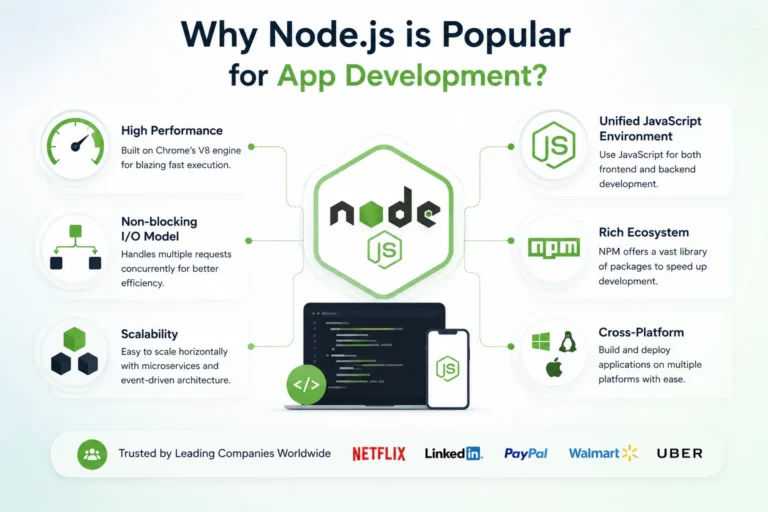
Node.js is an open-source system that helps developers build fast, scalable apps. Here are key reasons why companies prefer the Node js framework for app development:
- High Performance: Node.js runs JavaScript very fast. This makes it a great choice for high-traffic apps.
- Event-Driven Design: Node.js uses a single-threaded, event-driven model. It handles many requests at the same time with great speed.
- Scalability: Node.js supports microservices perfectly. It allows apps to scale horizontally. You can easily add more instances when needed.
- Rich Ecosystem: The Node Package Manager (NPM) offers many ready-to-use packages. This speeds up coding and ensures faster delivery.
- Cross-Platform: Developers use the same JavaScript code for both the frontend and backend. This cuts down costs and development time.
- Active Open-Source Community: The framework is constantly updated and refined by a massive global community of contributors. This means security patches are released quickly, and modern web standards are adopted without delay.
How do Leading Tech Companies Use Node.js?
Node.js offers many built-in features, libraries, and frameworks. Developers use these tools to build high-performing apps. Here are key optimizations made by every professional Node js developer:
1. Enhancing Performance and Reducing Startup Time
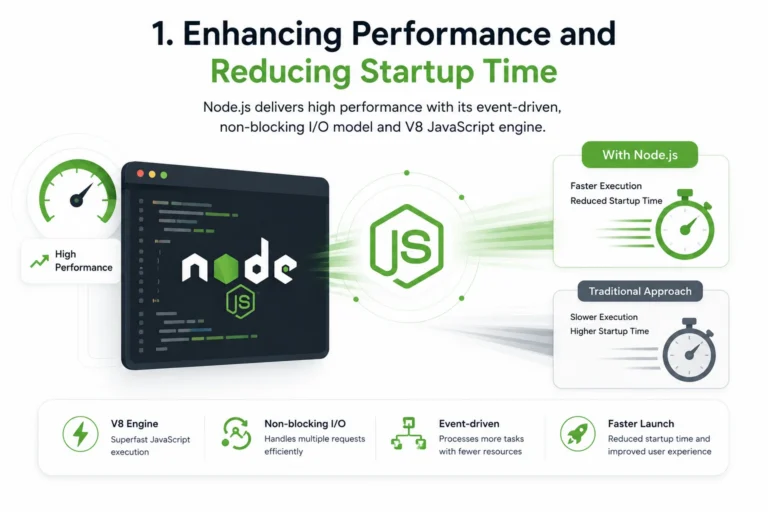
Did you know that Netflix is a popular app built on Node.js? Here is how developers optimize its performance to make it faster:
- Better Load Handling: Using a non-blocking model, Netflix efficiently manages millions of active users at once.
- Microservices: A microservices approach improves overall app speed and reduces downtime.
2. Scaling Up with a Lightweight Tech Stack
You can scale a lightweight Node.js stack by improving code, using caching, and leveraging cloud tools. Here is why scaling this stack is beneficial:
- Faster App Performance: The new system runs much faster than the older setup.
- Efficient Server Use: Node.js can greatly reduce the total number of needed servers.
- Seamless Mobile Experience: Node.js improves mobile efficiency. This directly enhances the user experience.
Beyond mobile efficiency, a lightweight stack also simplifies the onboarding process for new developers. Because Node.js removes the heavy boilerplate associated with older enterprise architectures, engineering teams can build and test new features rapidly. When an application logic is simple and modular, debugging becomes much more straightforward. This agility allows businesses to pivot their product offerings faster based on real-time market feedback, keeping them highly competitive.
3. Streamlining Payment Processing

Node.js is great for building ecommerce solutions. Here is how payment processing becomes simpler with this framework:
- Faster Development Cycles: App deployment is much faster with Node.js.
- Unified Codebase: JavaScript is used for both the frontend and backend. This simplifies the coding process.
- Better Response Time: Node.js drastically reduces response times. This greatly improves user transactions.
4. Real-Time Data Processing
Node.js uses an event-driven design that processes thousands of requests per second. The following two features make it perfect for real-time solutions:
- Data Handling: Node.js collects and analyzes data instantly. This quickly optimizes your core matching logic.
- Faster Deployment: The design pattern of Node.js allows teams to roll out fast updates.
This real-time capability is essential for modern applications like live collaborative document editing, competitive multiplayer gaming, and instant financial stock tickers. Users expect their screens to update the millisecond new data arrives without requiring a manual page refresh. WebSockets integrate seamlessly with the Node.js event loop to push these live updates efficiently. By maintaining persistent connections with thousands of clients simultaneously, your server avoids the heavy overhead of constantly establishing new HTTP requests.
Why Businesses Should Partner with a Node.js Development Company?
Adopting Node.js provides many benefits. Businesses with the right expertise can maximize its potential. A professional Node.js app development company offers:
- Skilled Node.js Developers: Expert professionals who clearly understand the best practices for speed and scale.
- Custom Node.js Solutions: Tailored web development services that directly meet specific business needs.
- End-to-End Development Services: From planning to launch, a Node.js service covers all aspects of development.
- Ongoing Support and Maintenance: This ensures your apps remain fast and secure.
- Seamless Third-Party Integrations: A dedicated team can effortlessly connect your app with external payment gateways, CRM platforms, and cloud storage providers using reliable APIs.
If you need top-notch node js web development services, contact us today. Take your app to the next level with the best team of developers. We will optimize your app’s performance and scalability.
Key Architectural Advantages of Node.js for Enterprise Scale
The enterprise app sector has strict rules for development tools. They require high concurrency, cloud readiness, and fast responses. Node.js is perfectly suitable for this due to the following reasons:
- API Integration: The framework provides many API tools like Express, Fastify, and NestJS. These are great for building RESTful and GraphQL APIs. Node streams let you read large data in small chunks. This keeps the server’s memory usage extremely low while processing requests.
- Asynchronous I/O: Node.js uses an event loop to process incoming requests. Traditional servers create a new thread for every request. This wastes a lot of memory. Node.js offloads database queries to background threads. It keeps the main thread free to process the fast queue.
- Built-in Microservices: Modern apps are moving toward microservices. This means breaking systems down into small units. Node.js apps have a tiny memory footprint. This lets developers launch more services on one machine. It works perfectly with Docker and Kubernetes.
- Unified JavaScript: Node.js uses JavaScript on both the server and client side. This consistency completely removes the need to switch contexts while coding. It drastically increases development speed. Sharing code is easier, which reduces maintenance work.
Best Practices for Scaling Node.js Applications
To ensure peak performance and avoid system overloads, developers should follow these suggested best practices:
- Offload Heavy Tasks: To boost performance, offload CPU-heavy math to background threads. You can do this using built-in Worker Threads or external queue tools.
- Implement Caching: Reduce database calls to optimize data reading speeds. It is best to cache frequently accessed data using fast tools like Redis or Memcached.
- Utilize Cluster Mode: Your server should use the Node.js cluster module. This launches processes across all available CPU cores for maximum speed.
- Optimize Queries: To speed up your database queries, ensure all databases have proper indexes. Do not access them synchronously, as this can overload the system.
Furthermore, implementing robust logging and monitoring is crucial when scaling horizontally across multiple servers. Standardizing your log formats allows DevOps teams to trace errors across different microservices instantly. Using a centralized logging solution ensures that critical error data is never lost, even if a specific server instance crashes unexpectedly. This proactive observability greatly reduces the time it takes to diagnose and resolve production incidents.
Real-World Bottlenecks: What Most Tutorials Don’t Tell You About Node.js
Node.js is incredibly fast out of the box. But scaling it in production brings a few trade-offs that every dev team eventually faces. Here is how real production setups handle these speed bumps smoothly:
1. The CPU-Bound Calculation Pitfall
Being single-threaded limits Node.js when performing heavy CPU tasks. Tasks like parsing CSV files, image editing, and encryption must be given to a different thread. This totally avoids CPU blocking.
- The Fix: Modern teams never push heavy math to the main thread. They move these tasks to Worker Threads. They also use background task queues like BullMQ with Redis. This keeps your API fast and ready for the next web request.
2. Memory Leaks That Sneak Up at 2 AM
The automatic memory manager works great for JavaScript. But, unclosed database links, long global variables, or stuck event listeners will eat all your memory. This causes random Out-Of-Memory (OOM) crashes during heavy traffic spikes.
- The Fix: Set up active tracking with tools like Clinic.js or Datadog. You should set clear heap limits (–max-old-space-size). Running automated health checks will safely restart containers before your users ever notice a drop in service.
3. Database Connection Pooling
Node.js can easily handle tens of thousands of active connections. However, your SQL database (like PostgreSQL or MySQL) usually cannot handle 10,000 simultaneous open links.
- The Fix: Always use connection pooling. You can also place a database proxy (like Prisma Data Proxy or PgBouncer) between your Node app and your database layer. This handles connection surges very smoothly.
Final Verdict: Is Node.js Right for Your Stack?
Node.js remains unmatched if you are building real-time chat platforms, streaming APIs, or microservice gateways. It is also perfect for complex e-commerce sites and high-traffic SaaS apps. Its ability to reuse code across JavaScript teams speeds up your launch time. It also keeps your daily server bills very manageable.