

- 1 Unique codebase reduces vulnerability exposure
- 2 Role-based access controls improve data protection
- 3 Fewer third-party dependencies minimize risk
- 4 ASP.NET enables secure authentication and data handling
- 5 Regular audits and updates ensure long-term resilience
Security breaches are growing concerns for companies at all levels. So many are turning to bespoke software for making custom-built solutions designed to meet unique requirements. One of the strongest benefits of bespoke is its enhanced security, which reduces the risk of cyber threats and unauthorized access. Here, we will look more at how this software offers better security advantages, especially when combined with robust development frameworks like ASP.NET technology.
Why Security Matters More Than Ever?
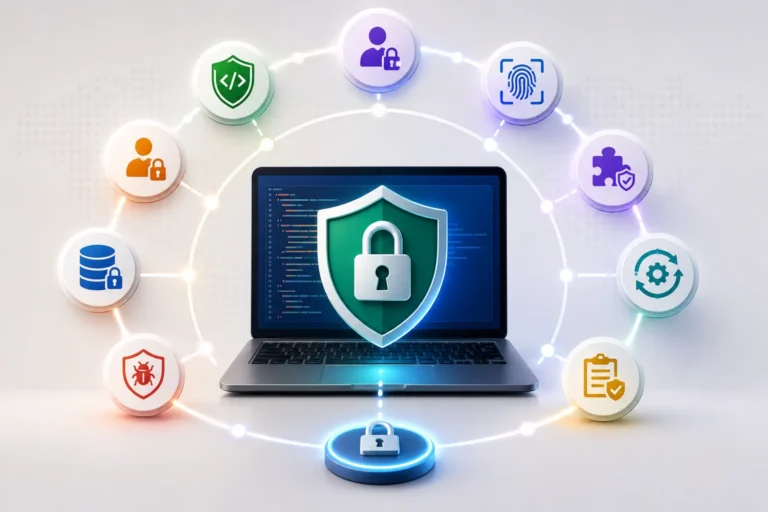
Cybersecurity threats are becoming a major concern as they are no longer limited to big organizations. Businesses are also frequent targets of phishing, ransomware, and data breaches. A 2024 study by CyberEdge Group revealed that 71% of organizations experienced a cyberattack in the last year.
The Hidden Risks of Off-the-Shelf and Mass-Market Software
It should be noted that the very nature of generic, widely-applied software solutions involves a substantially higher risk to start with, and it is worth understanding how bespoke development addresses these concerns.
Firstly, note that those platforms which are popular and widely-used act as a single point of failure for thousands or even millions of businesses. The mere fact that the solution is used by many implies that the discovery of any security detail or vulnerability will inevitably impact every company that uses the software. This is exactly why research into vulnerabilities and public disclosure of private information about the inner workings of such products is so heavily scrutinized and why companies scramble to patch their systems once a weak point is discovered and a potential attack vector identified. Popular solutions do not have the luxury of time to fix subtle issues; even if the vulnerability itself is not critical, any hiccup in the process can result in a security breach.
The process of actually applying the fix is another weak point in the chain, and it is here that many organizations that rely on generic solutions fail to address completely. It should be noted that the updates to the software are implemented on a schedule determined solely by the maintenance and development team of the product, and not the business that uses it. This means that any given software can stay unpatched for a moderately long duration due to the negligence of the organization’s own IT department or due to the complexity of the update process. A single overlooked update is a vulnerability that an attacker can use to infiltrate the system.
Lastly, it is worth considering the matter of public knowledge about the inner workings of the product. Solutions which are used widely usually have had their code publicly available or at least analyzed by third-party security firms, and many details about their functioning are known to most participants in the industry. This is not a major concern for most businesses, but it does highlight another difference between generic and bespoke solutions: the former’s code and other details are widely known, whereas with proprietary solutions, such information is only available to the development team. Any publicly available information about a potential security threat, whether it is code or a vulnerability description, is potentially useful to an attacker.
In summary, it should be stated that the discussed differences between generic and bespoke solutions do not imply that the former are inherently insecure or that their use is inadvisable. However, it is evident that in most cases, businesses must weigh the convenience of using a widely-applied solution against potential security concerns that come with it.
Bespoke Software
Unlike other software that serves a general audience, this software is made for more specific businesses, making it far difficult for attackers who look for mass vulnerabilities.
Here are some reasons that this personalized software gives you a security edge:
1. Unique Codebase Reduces Exposure
Mass-market software products use publicly known coding frameworks and widely distributed architectures. This makes it simpler for hackers to reverse-engineer vulnerabilities. In contrast, built-to-spec software features a unique codebase that is not publicly accessible, reducing the attack surface.
Hackers tend to focus on applications with the largest potential user base to maximize impact. A bespoke solution built specifically for your business offers them less opportunity and little incentive to target.
2. Controlled User Access and Permissions
With software like bespoke, businesses can implement highly granular settings for permission that align exactly with their operational roles. Whether you need multi-tiered user access or role-specific restrictions, you can enforce strict control over who can view, edit, or manage data. This flexibility is particularly important in custom CRM/ERP solutions, where confidential customer and operational data must be rigorously protected.
3. Reducing Third-Party Dependencies
Off-the-shelf software depends mostly on third-party plug-ins or APIs for extended functionality. These integrations can led to additional vulnerabilities. This software minimizes or eliminates the reliance on third parties by providing built-in functionality for your workflows.
With fewer dependencies externally, there are fewer entry points for attackers, which is another compelling reason to choose business software solutions that are built with security in mind.
Data Privacy and Compliance: Another Security Advantage
Security and compliance are closely related, and bespoke software tends to offer real advantages on the compliance side that are worth calling out separately from the points above.
Many industries operate under specific regulatory requirements around how customer or patient data is handled — healthcare organizations working with protected health information, financial services firms subject to data-handling rules, or any business processing payment card information under PCI standards. Off-the-shelf software wasn’t built with any particular business’s regulatory obligations in mind. It’s designed to work reasonably well for a broad range of customers, which often means compliance features are either bolted on afterward or left for the business to configure and verify itself.
Bespoke software can be designed around a specific compliance requirement from the start, rather than adapted to fit one after the fact. Data retention rules, audit logging, access controls, and encryption standards can all be built in as part of the application’s core design, tailored to exactly what a particular regulation requires rather than the generic version a mass-market vendor decided would satisfy the largest number of customers at once. This matters particularly for audit purposes — when a regulator or auditor asks how a specific piece of data is protected, a business running bespoke software can generally point to a specific, documented answer rather than relying on a third-party vendor’s general claims about their platform.
This is also where custom CRM and ERP systems, mentioned earlier in the context of access control, tend to show a clear advantage. These systems often hold some of a business’s most sensitive data — customer records, financial details, internal operational data — and a compliance gap in a system handling that much sensitive information carries real consequences, both regulatory and reputational.
ASP.NET: A Secure Framework for Bespoke Development
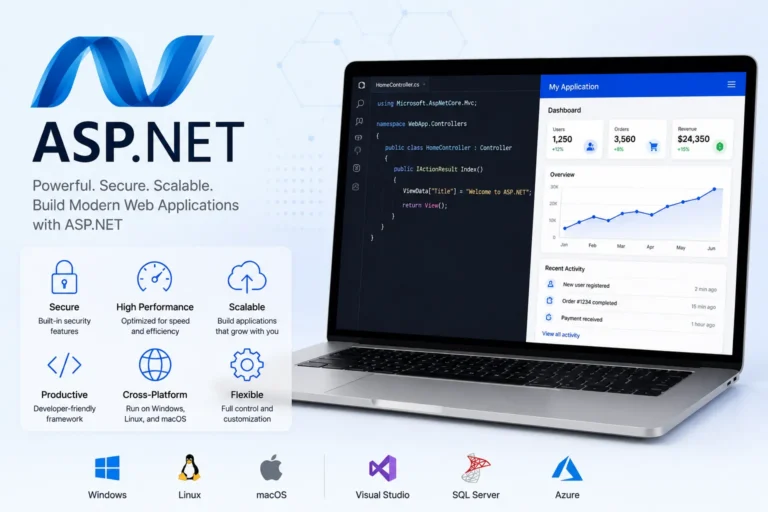
When building bespoke, the technology stack plays an important role in ensuring robust security. ASP.NET technology is one of the most secure and scalable frameworks for web application development.
Some important benefits of using ASP.NET for bespoke include:
- Built-in authentication and authorization protocols such as OAuth and multi-factor authentication (MFA).
- Automatic validation of the request to prevent cross-site scripting (XSS) and SQL injection.
- Encryption support for storage and secure data transmission.
- Regular security patches and updates from Microsoft, keeps the system resilient against different threats.
By using ASP.NET, developers can implement better security features as standard, ensuring your custom CRM/ERP solutions are protected from the ground up.
Ongoing Security Maintenance and Audits
Another key security advantage of this software is the ability to define your own update and audit schedule. Regular code audits and penetration testing can be scheduled as per the possibilities of risk profile, ensuring that your business software solutions are always ahead of emerging threats.
Ready to Explore The Security Advantages Of Custom Software Development? Choosing bespoke software is a strategic investment for your organization’s security. With customizable access controls, a unique codebase, minimized external dependencies, and the power of ASP.NET, you gain a software solution that meet your needs and also resilient against cyber threats. Opt for bespoke and gain peace of mind, ensuring your data is secure, scalable, and built just for you. Let us help you design and implement software that can protect your data enhancing your business success.
What to Look for in a Bespoke Development Partner
The security advantages described above rely on the software development process, which makes it one of the most crucial choices any business has to make when looking for a development partner.
There are several questions they should ask before finalizing any decision. Firstly, inquire about the security practices that the development team has in place. A competent team that takes security seriously will have the required infrastructure and operations in place to prevent potential breaches, contrary to teams that only apply security practices after the development process ends.
Asking about the developers’ experience with similar frameworks is the second common-sense question that should be asked. A competent team has adequate knowledge of the framework’s intricacies and how to use them to secure the application, contrary to those that only know how to use their theoretical knowledge in an academic setting. Requesting information about past projects that the company has handled gives insight into how experienced a development team is. Ask about applications that require high security, such as the CRM and ERP systems mentioned above. The third question should be about post-launch support.
Software developed by bespoke developers requires constant maintenance and security updates long after its initial launch. As such, ask the shortlisted companies about their support and maintenance policies. Any competent organization should have a maintenance schedule that it recommends or requires the client to adhere to concerning the frequency of these audits. One must also ask how these companies intends to deal with the ever-evolving list of threats and loopholes in the programming frameworks the developed application is built on. The fourth and final question should be about documentation and handover processes.
A competent company will always document all procedures concerning the developed application. This way, even if the lead developer who understands the software’s inner workings is unavailable, the rest of the team can take over without encountering significant challenges.