



Picking .NET is the easy part, most of the ROI actually comes from decisions made around the framework, not the framework itself. Budgeting honestly, choosing the right .NET version for your use case, building deployment automation early, planning your integrations before you need them, and actually measuring what happens after launch are what separate a project that pays for itself and one that quietly bleeds money for years. The sections below cover the parts of that process most vendors don’t bring up until you’re already mid-project.
- 1 .NET is a powerful framework for building scalable, secure, and flexible web applications.
- 2 Strategic planning and expert partnership are crucial for maximizing ROI.
- 3 Cross-platform development and performance optimization lower long-term costs and boost user satisfaction.
- 4 Robust security and continuous support protect and future-proof your investment.
- 5 User experience (UX) plays a direct role in customer retention and conversions.
Every business wants to ensure that every investment they make delivers a maximum return on investment (ROI). When it comes to building scalable, robust, and secure web applications, Microsoft’s .NET framework stands out as a preferred choice. However, choosing the right technology is not enough, you need the right strategy to truly maximize your return on investment (ROI). Effective use .NET web solution development can be very influential in making relevant websites that gives maximum ROI. We will look here more about Microsoft .NET and its role in effective web development.
Why Choose .NET?
.NET provides a powerful platform for creating dynamic web applications. It is popular for its flexibility, scalability, and security features. As .NET web solution development service is ideal for businesses aiming for business growth on digital platforms. When you are building a customer portal or a large-scale e-commerce platform, .NET offers the technical strength needed.
Steps to Maximize ROI on Web Solution Development Using .NET
.NET has many features that allow you to develop scalable and user-friendly apps. Here’s what you can do to ensure that your app can contribute the most towards your business growth:
1. Choose the Right .NET Development Experts

Look for providers who understand your requirements, offer technical expertise, and are capable of delivering customized solutions. A reliable .NET web/app solution development technology will ensure that your application aligns with your business objectives. Partnering with professionals allows you to tap into modern features such as minimal APIs and secure authentication frameworks.
2. Prioritize Gathering Of Requirements

Understand what features are absolutely necessary what your customers expect, and where your competition stands. A .NET development must offer detailed planning sessions that can help you optimize workflows, prioritize features, and minimize unnecessary costs. It will ensure every aspect of your solution is essential and value-driven.
3. Leverage Cross-Platform Development
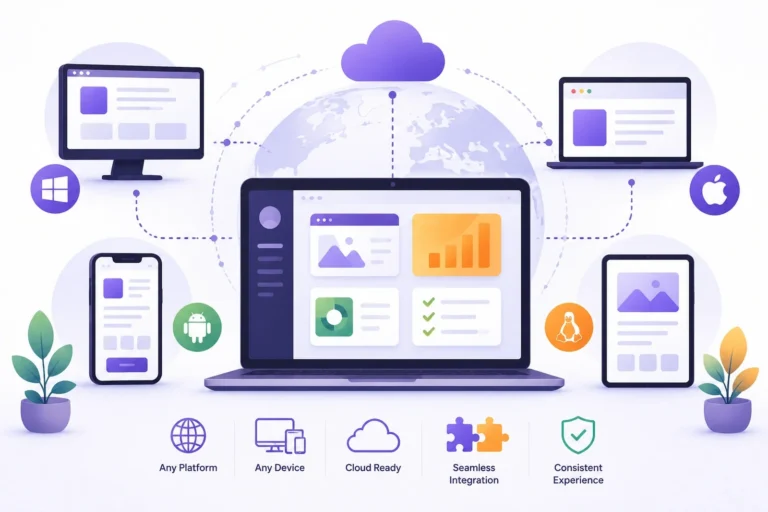
By using a cross-platform approach, your .NET can target Linux, Windows, and macOS servers. It can reduce deployment costs and increase flexibility. Investing in a .NET web solution development company that understands cross-platform best practices will help you future-proof your application
4. Optimize for Performance and Scalability

A slow application can drive away users and hurt your ROI. Experts can optimize applications for performance. Techniques such as asynchronous programming, caching, and efficient database access patterns will ensure your application runs smoothly. Additionally, integrating scalability features during .NET web solution development like load balancing can handle increased traffic without a complete overhaul.
5. Incorporate Robust Security Measures

Trustworthy ASP.NET developers working in the development company will build security into the your application by leveraging built-in .NET security features. This proactive approach can save a lot of potential losses and other legal complications.
6. Invest in Ongoing Maintenance and Support

Many businesses see development as a one-time project. Partnering with a .NET web application development agency that offers long-term support. It ensures that your application stays secure, updated, and aligned with evolving market needs. A good maintenance plan includes regular updates, performance tuning, and proactive bug fixing.
7. Focus on User Experience (UX)

Investing in responsive layouts, intuitive design, and seamless navigation can boost user retention and satisfaction rates. By working with a .NET expert in a web development agency can prioritize UX during the development cycle. It will ensure better conversion rates, higher engagement, and a direct impact on your ROI.
8. Know the True Cost Structure Before the Beginning
I’ve witnessed too many situations where clients budgeted only for the very beginning of development, which immediately creates ROI-related issues after launch because of improper budget allocation.
A properly budgeted .NET project will have several cost items: development, infrastructure/hosting (Azure or any other provider), third-party licensing (if any), and maintenance/upkeep. This last position is the one that many people forget to budget for, with a good rule of thumb being 15-20% of the initial development cost per year for maintenance and security updates.
If the vendor’s documentation only has one position, it’s always worth asking more questions before signing the contract.
9. Choose Between .NET Framework, .NET Core and Modern .NET Wisely
One of the discussions that I have with clients more often than not concerns the choice between .NET Framework, .NET Core (modern .NET) and classic .NET. Microsoft’s official stance is that .NET Framework is deprecated and no longer receives support or updates, while modern .NET is the preferred multi-platform framework with regular language and framework updates. .NET Core, which is also known as .NET 5 or .NET 6 depending on the version, is the direct successor to .NET Framework.
Unless there are strong reasons to do otherwise (primarily legacy dependencies that refuse to work with modern .NET), it’s always better to choose modern .NET for new development. It has better performance characteristics out of the box and receives all the latest language features first, which can be critical for applications that need to evolve quickly. Another consideration is that modern .NET is actively developed and maintained, which means better long-term support and security.
If you’re considering migrating an existing .NET Framework application to modern .NET, this is a separate discussion that would take into account the potential costs and benefits of such an endeavor.
10. Set Up the CI/CD Pipeline Early and Often
I’ve made the mistake of postponing pipeline setup multiple times, and the only result of such an endeavor was frustration on my end because I had to make too many changes later. Setting up CI/CD as soon as possible after launch will help you realize how many regular production updates can be automated and will save you a lot of time and effort in the long run.
A .NET project paired with Azure DevOps and the right infrastructure will allow you to set up automated unit and UI tests, which in turn will help you avoid shipping broken code to production. It’s important to note that the same code would take significantly more time and effort to test manually or even worse – not tested at all. This results in a much higher cost and risk when deploying to production.
11. Think About Third Party Components
The reality is that most business applications these days interact with several third-party endpoints and rely on them. The mistake that many companies make is to not plan such dependencies ahead and try to add them later when the application’s core is already set.
For .NET developers, most common third-party dependencies are related to payment gateways, CRM, email marketing, and analytics. The good news is that .NET has excellent official libraries for most of these services. However, it’s always better to design the application in such a way that adding external dependencies is not error-prone and can be done relatively quickly. It’s also important to understand that these components usually have their own licensing and pricing model that should be taken into account when planning the overall project budget and ROI.
Although many applications have at least one third-party dependency, there are always some that will require special attention due to their complexity or level of importance to your application.
12. Track the Right Metrics After Launch
- Track the Right Metrics After Launch
Launching the application does not equal the end of the journey, but rather the beginning of it. And yet it is the stage that is frequently forgotten after the project is delivered and everyone moves on to the next fire.
Application Insights (which is available in Azure and perfectly integrated with .NET) allows you to track the key performance indicators of the software without any extra effort. But remember to set up product-led indicators as well – the ones that directly relate to the business goal. Depending on the software, it can be a conversion rate (for customer-facing applications), hours saved through automation (for tools aimed at enterprises), or a reduction in support tickets (if the software replaces an existing process). Without this step, you will always be guessing if and how your ROI has been achieved.
I have seen many projects that delivered excellent software with no apparent issues. But when it came to actually proving the ROI to the executives, no one was ready for the discussion. This left the managers with the unpleasant task of convincing the shareholders that their investment has not been wasted.
Are You Ready to Maximize your ROI with Microsoft .NET?
Maximizing ROI on web development projects requires more than just building an application. Microsoft .NET provides a foundation for building high-quality web solutions. However, your choice of a .NET web solution development service, ensures emphasis on performance, commitment to security, and a user-centered design approach to overall success.
Focusing on both the technical and business aspects of your project can ensure that your investment in Microsoft .NET will give outstanding returns for years to come. Find an expert company in .NET soon to take the first step toward future-proof success.